
Poor Quality Sewing Thread vs High Quality Sewing Thread
Technician Tips · Thread
Poor quality thread is a massive impediment to consistently good stitch quality. Get it out of your life, and you’ll run into fewer problems and be a much happier sewist.
Bad thread shows up at the repair bench in three ways: skipped stitches, thread shredding and breaking, and tension that won’t balance. Below, I’ll explain why.
The short version
Cheap thread is stiff, sticky, or uneven. That distorts the thread loop (skipped stitches), snags on the thread path (shredding and breaking), and drags unevenly through the tension discs (tension problems).
Loop Creation & Skipped Stitches
Why the shape of the loop matters
Skipped stitches occur when the hook point fails to catch the thread loop formed at the needle eye as the needle begins to rise from its lowest position.
One way the hook point can miss is if the shape of the loop is distorted. Critical settings like needle-hook timing and needle-hook clearance may be perfect, but if the loop isn’t where it should be, the hook point will miss it and you’ll get skipped stitches.
Poor quality thread can have characteristics that prevent it from consistently forming a proper, catchable loop at the needle eye. For example:
- Excessive stiffness. Stiff thread takes a long time to form a loop. When the hook point passes above the needle eye, the loop is extremely narrow, more like a slit than a loop, making it much harder for the hook point to pass through.
- Excessive stickiness. Thread with too much viscosity sticks to itself. Instead of forming a loop, it twists into a figure-eight or some other strange shape that the hook point can’t consistently catch.
An analogy
The thread loop is a doorway and the hook point is a person who needs to walk through it. With quality thread, the doorway is where it ought to be: on the ground, eight feet tall, three feet wide. Poor quality thread warps the doorway. It ends up five feet off the ground, slanted at 45 degrees, or shrunk to one foot wide and three feet tall.
Troubleshooting skipped stitches?Skipped Stitches Troubleshooting Flow Chart
Thread Shredding & Breaking
Count the contact points
Poor quality thread is more prone to shredding and breaking than high quality thread. Why? It’s more uneven, with kinks and crimps at random, so it’s more likely to snag along the upper thread path.
Take a look at your sewing machine and notice the path of your upper thread, and all the contact points it touches on its way to the needle:

Not only is the thread constantly under tension from the tension discs, it’s also constantly touching the take-up lever, the check spring, and various thread guides:
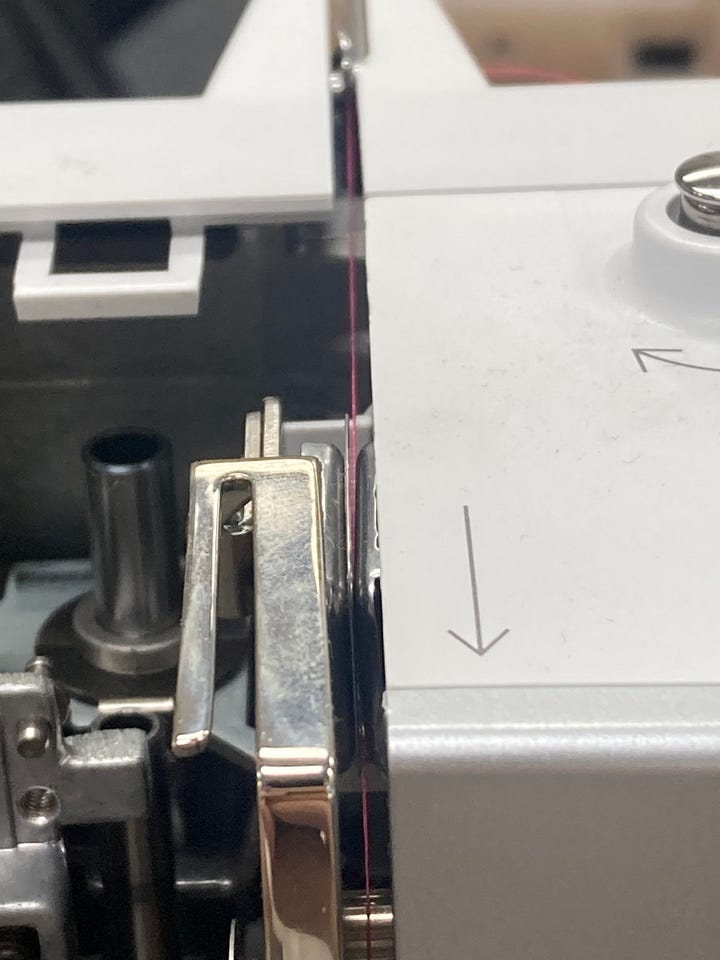
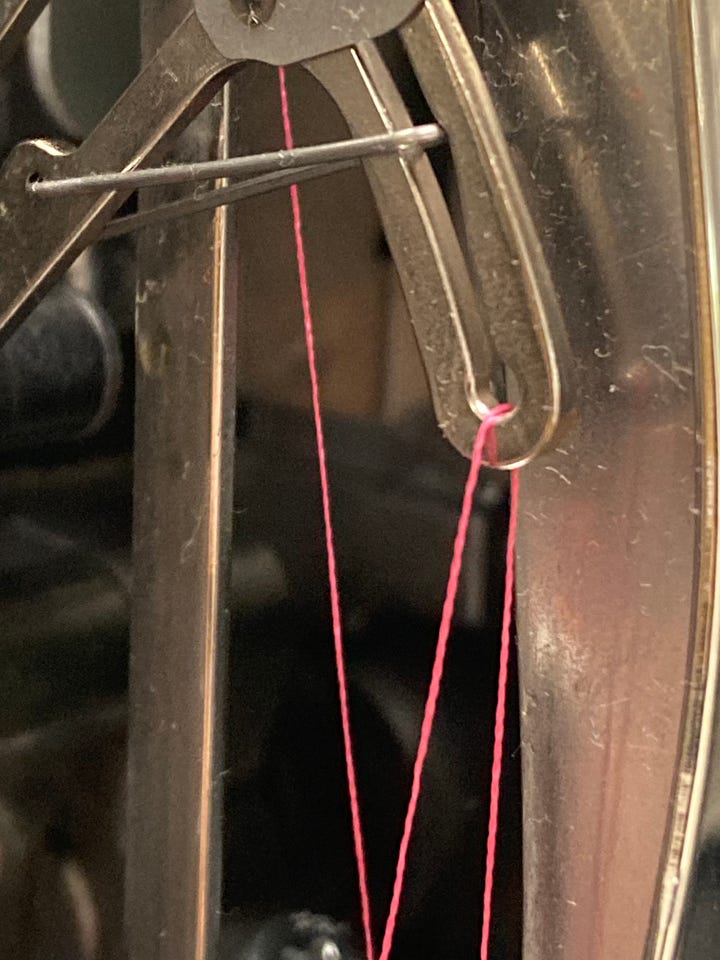
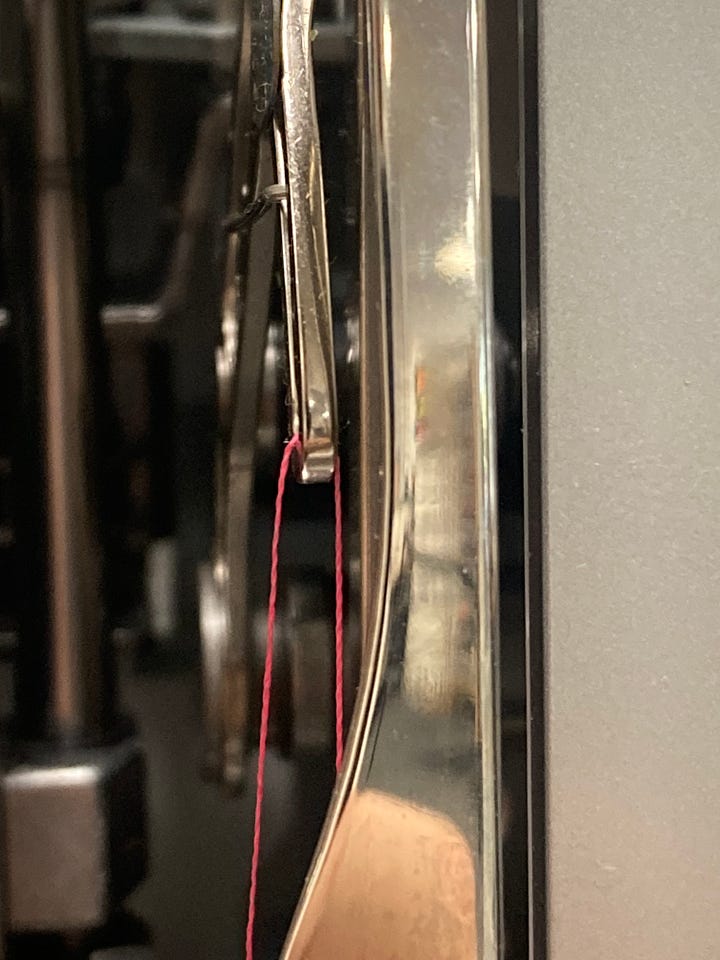
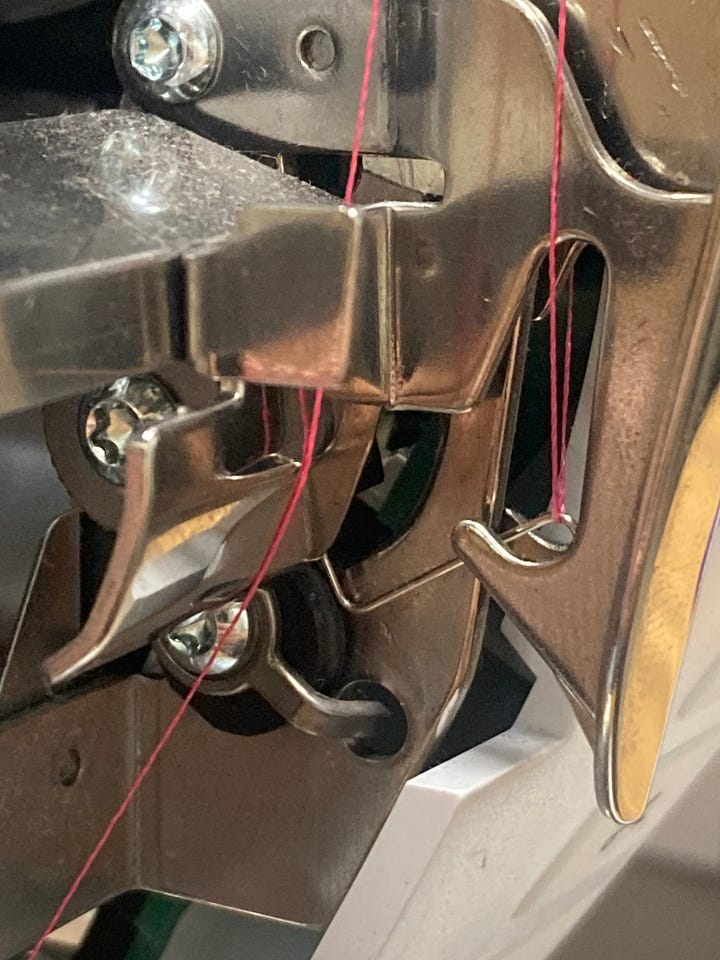
Every one of these is a place the thread slides across, thousands of times per seam.
Meanwhile, underneath the needle plate, the thread passes over the bobbin case and hook mechanism during every single stitch. Not to mention, it’s constantly sliding through the biblically minuscule needle eye:
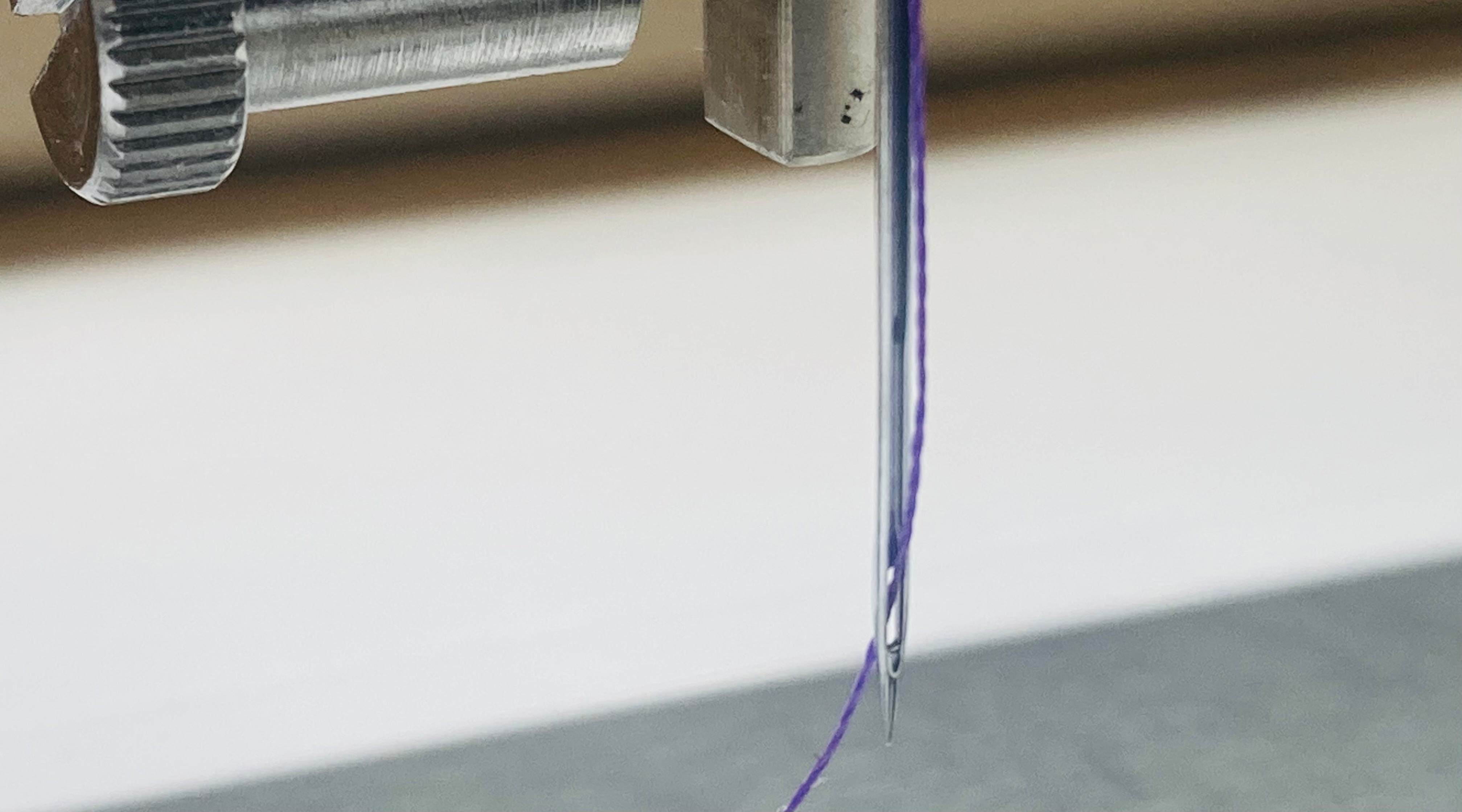
I point out all these parts to make a broader point: look how many places the thread slides over as the machine sews. The engineers who design these machines take pains to make every contact point smooth and “thread friendly,” but it’s not enough to consistently overcome brittle, uneven thread that falls apart under contact. I’ve had countless experiences where someone comes into the shop complaining of shredding or breaking, and when I rethread the machine with quality thread, the problem doesn’t repeat itself.
Tension Issues
Drag that changes as you sew
A sewing machine uses two sources of thread to make a stitch: the bobbin thread and the upper thread that goes through the needle. Both constantly pass between enclosed metal discs as we sew. That puts the thread under tension and (partially) determines whether the knot sits neatly between the layers of fabric, or pokes out of the top or bottom.

Thread that’s too stiff, too sticky, uneven, or kinked creates more drag through the tension discs than high quality thread. Worse, if those characteristics aren’t uniform throughout the spool, the drag changes as you sew, which makes it very hard to balance tension.
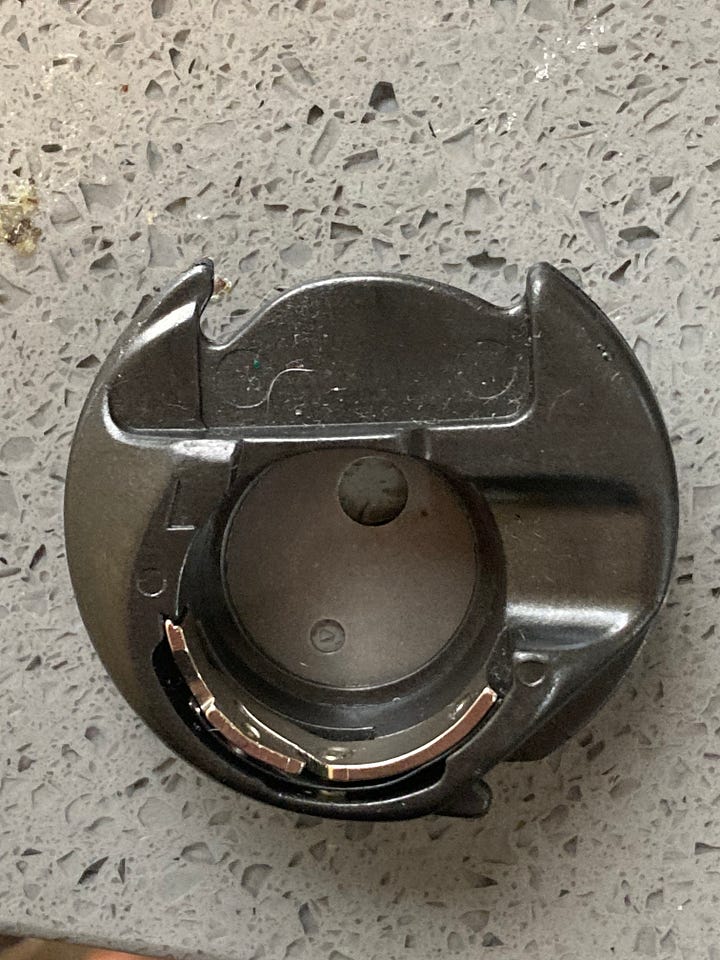
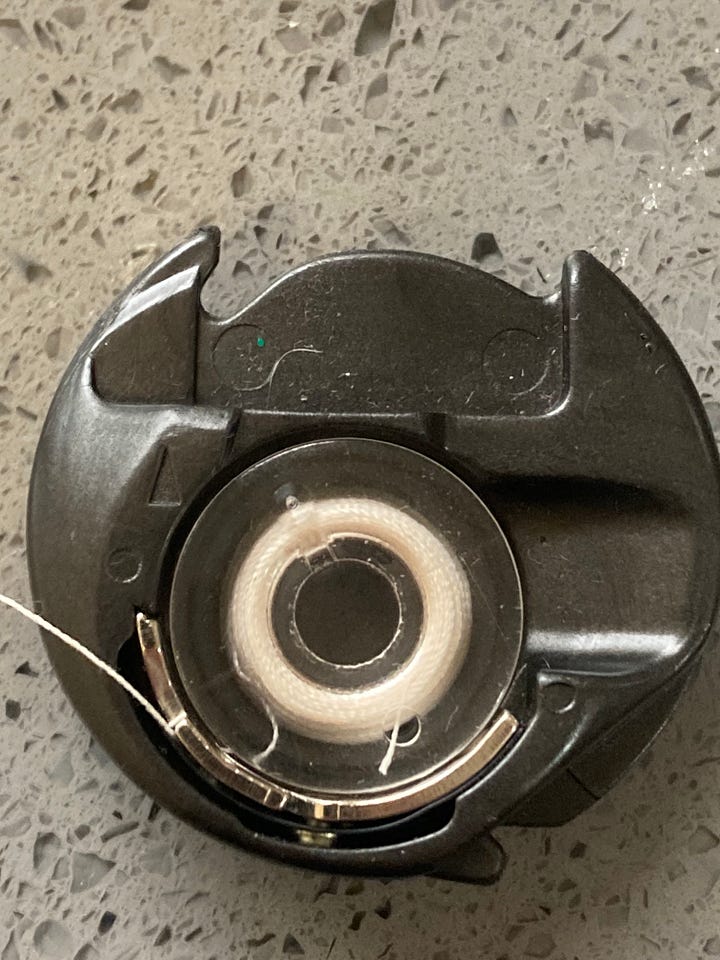
Upper tension discs and bobbin case tension: both add drag to stiff, uneven thread.
In my experience, especially stiff thread tends to show up as a knot poking out on the underside of the fabric. Part of the reason is that stiff thread increases drag on the bobbin case tension discs, which are more sensitive than the upper tension discs. Another reason is that stiff thread creates large, misshapen knots that are hard to cinch up into the fabric. They’re often larger than the hole the needle pierced, so they get stuck on the underside.

More on tensionBalancing Sewing Machine Tension
So, What Is Good Quality Thread?
A repair tech’s rules of thumb
I can’t vouch for every thread brand, because I’m not familiar with them all. But I will say a few things:
- The cheapest thread you can possibly buy is probably poor quality thread.
- The second-cheapest thread you can possibly buy is probably poor quality thread too.
- If your thread is so old the spools are made of wood, it’s time to stop using it.
- If you can’t break the thread with your fingers, it’s too stiff to use on a home sewing machine.
When someone comes into the shop with stitch quality issues and the spool on their machine isn’t Aurifil, Mettler, Isacord, Intressa, or Maxi-Lock, I unthread the machine and rethread it with one of those.
- Mettler
- Both their cotton and poly are good and relatively inexpensive.
- Aurifil
- Beautiful Italian cotton thread.
- Maxi-Lock
- Particularly great for sergers.
- Isacord
- Particularly great for embroidery.
- Intressa
- UV-rated thread, good for outdoor use.
Our full thread guideThe Ultimate Guide to Sewing Machine Thread
Shop thread we trust
Rethread with the good stuff
These are the brands we use on our own repair bench.
Thank you for reading
Remember, I come at this topic as someone who sells and repairs sewing machines. My primary concern is stitch quality, since a big part of my job is making sure each machine performs to the best of its ability.
I troubleshoot sewing machines every day and often get accused of performing magic, because I’ll sew on a customer’s machine and can’t repeat their problem. The truth is there’s no magic at play (most of the time). I simply insert a fresh needle and rethread the machine with quality thread.
— Cale
More troubleshooting
