
4 Different Hook Systems on Modern Sewing Machines
Sewing Machine Deep Dive
I refer to the sewing machine’s hook all the time. So it’s worth defining the four hook systems you’ll find on home sewing machines today.
After reading this, you should know which type of hook your machine has. It’ll also come in handy every time I mention the hook in other articles, which is often.
— Cale
What Does the Hook Do?
Its role in making a stitch
The hook sits below the needle plate, revolving around the bobbin and bobbin case. Its movement is timed with the movement of the needle.
The needle moves down, penetrates the fabric, and reaches its lowest position before it starts back up. As it rises, a thread loop forms at the eye of the needle. Meanwhile, the hook is rotating around the bobbin case, timed so the hook point passes behind the needle eye just as that loop forms.
After catching the loop, the hook keeps rotating around the bobbin case, taking the needle thread along for the ride. During the ride, the needle thread and bobbin thread form a loose knot, which ultimately gets cinched up into the fabric as a stitch.
The hook is integral to the stitch-making process.
The full stitch cycleHow a Sewing Machine Makes a Stitch
The 4 Hook Systems on Home Sewing Machines
Which one is in your machine?
- Horizontal rotary
- Drop-in bobbin. Spins a full circle. Most Janome, Brother, Baby Lock, and Juki home machines.
- Vertical rotary
- Front- or side-loading bobbin. Spins a full circle. Vintage Pfaff, Juki TL series, Janome HD9, Singer Featherweight.
- Oscillating (CB)
- Front-loading bobbin. Swings back and forth. Vintage and mechanical Berninas.
- Bernina B9
- Large vertical rotary hook with clever engineering. Modern Bernina 5, 7, and 9 series.
1. Horizontal rotary hook (a.k.a. drop-in bobbin)
Most modern sewing machines use a horizontal rotary hook. It’s the bread and butter of the Japanese manufacturers (Janome, Brother, Baby Lock, and Juki), who make very few home machines without one.
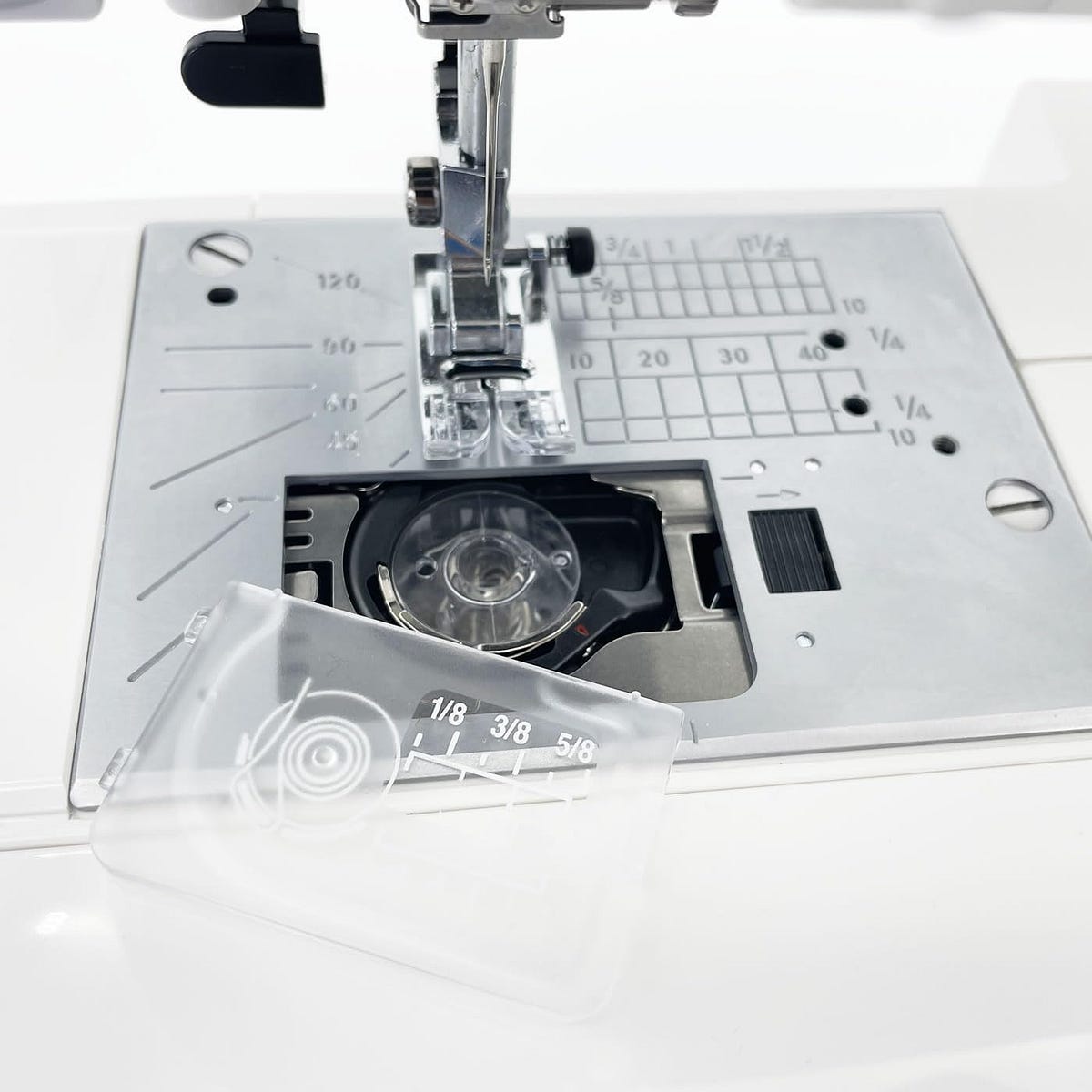
As the name implies, the hook is mounted horizontally: the bobbin and bobbin case lie flat, and the hook spins around them in a complete circle. It’s called a drop-in bobbin because you simply drop the bobbin into the top of the bobbin case instead of inserting it from the front or side.
A horizontal rotary hook in motion.
2. Vertical rotary hook
Like the horizontal rotary hook, the vertical rotary hook spins a continuous 360°. But it’s mounted vertically, so the bobbin faces forward.
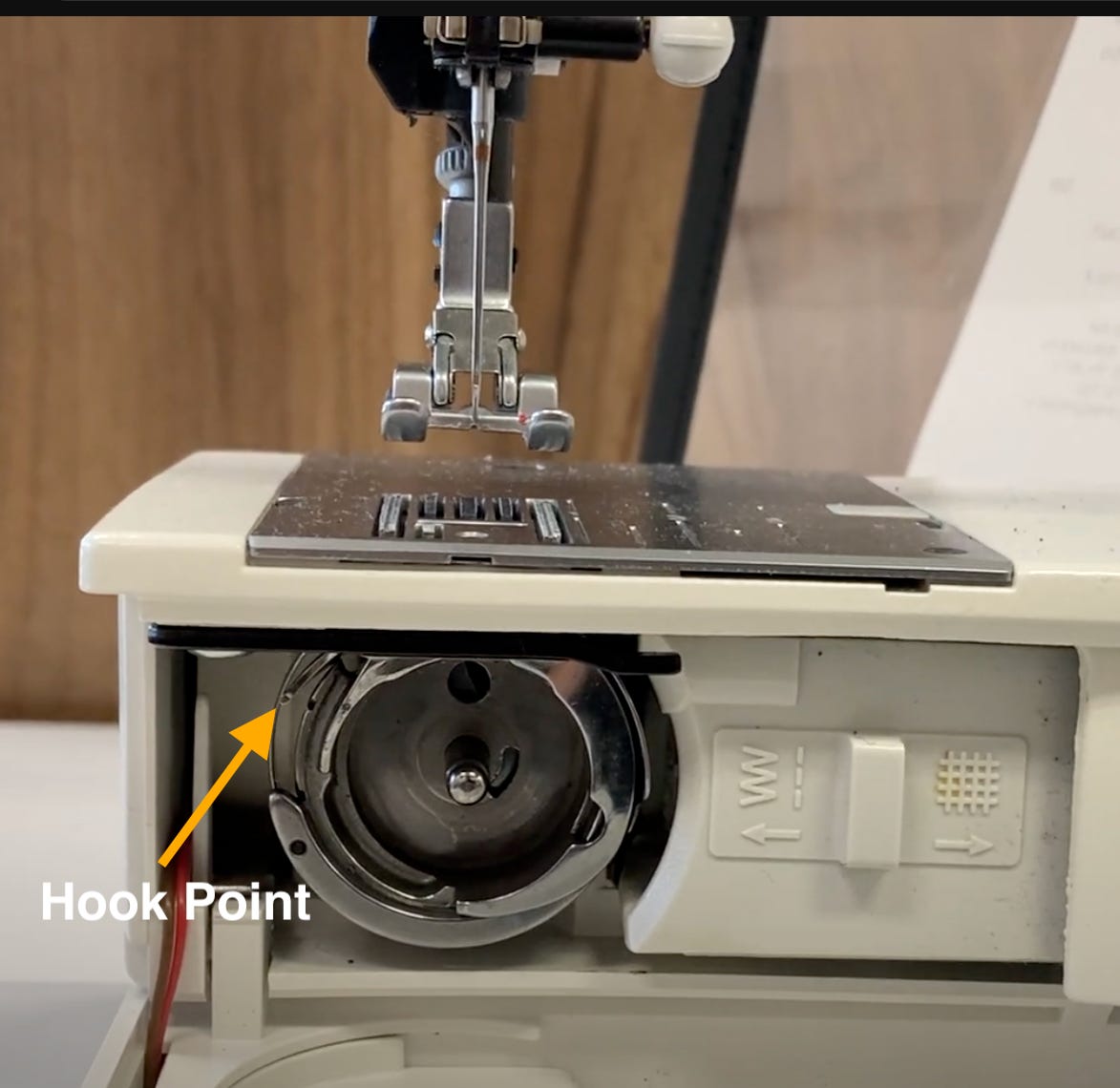
Some of my favorite vertical-hook machines are vintage Pfaffs, like the Pfaff 1471. Some Berninas from the early-to-mid 2000s also used a vertical rotary hook, but I’m honestly not a huge fan of those; I much prefer Berninas with the oscillating CB hook or the B9 hook, both covered below.
Semi-industrial machines like the Juki TL series and Janome HD9 use a vertical hook too, though they load from the side rather than the front. The Singer Featherweight is another side-loading vertical hook machine. (This is also why the needle’s flat side faces a different direction on these machines; see How to Replace a Sewing Machine Needle.)
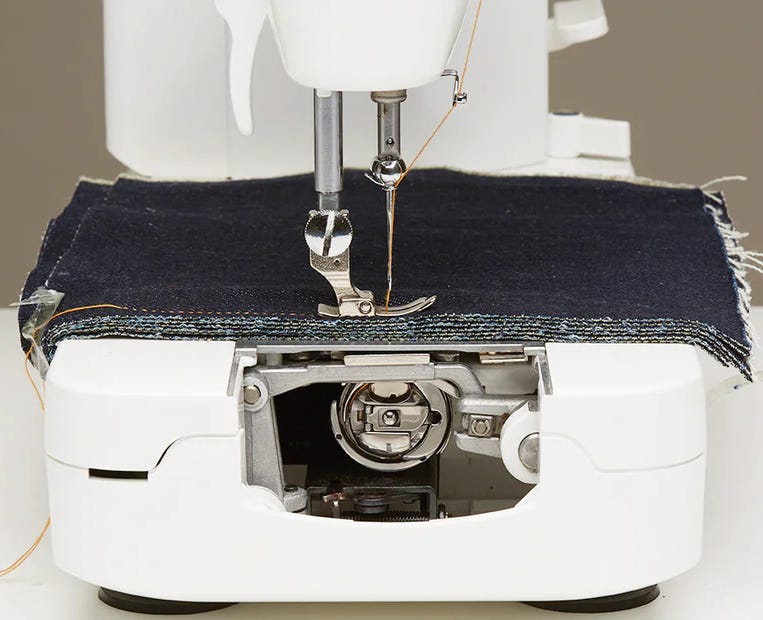
3. Oscillating hook (a.k.a. CB hook)
Like the vertical rotary hook, the oscillating hook is mounted vertically. But it doesn’t spin a continuous circle. Instead, it oscillates back and forth. You can see the movement clearly on this Bernina 830 Record:
The oscillating hook swinging back and forth on a Bernina 830 Record.
The best oscillating hook machines are vintage Berninas, like the 1030 and the 830 and 930 Records. Bernina has an extremely loyal following, and a big reason is that its oscillating hook machines are a joy to sew on. The feel is incredible and the stitch quality is hard to beat.
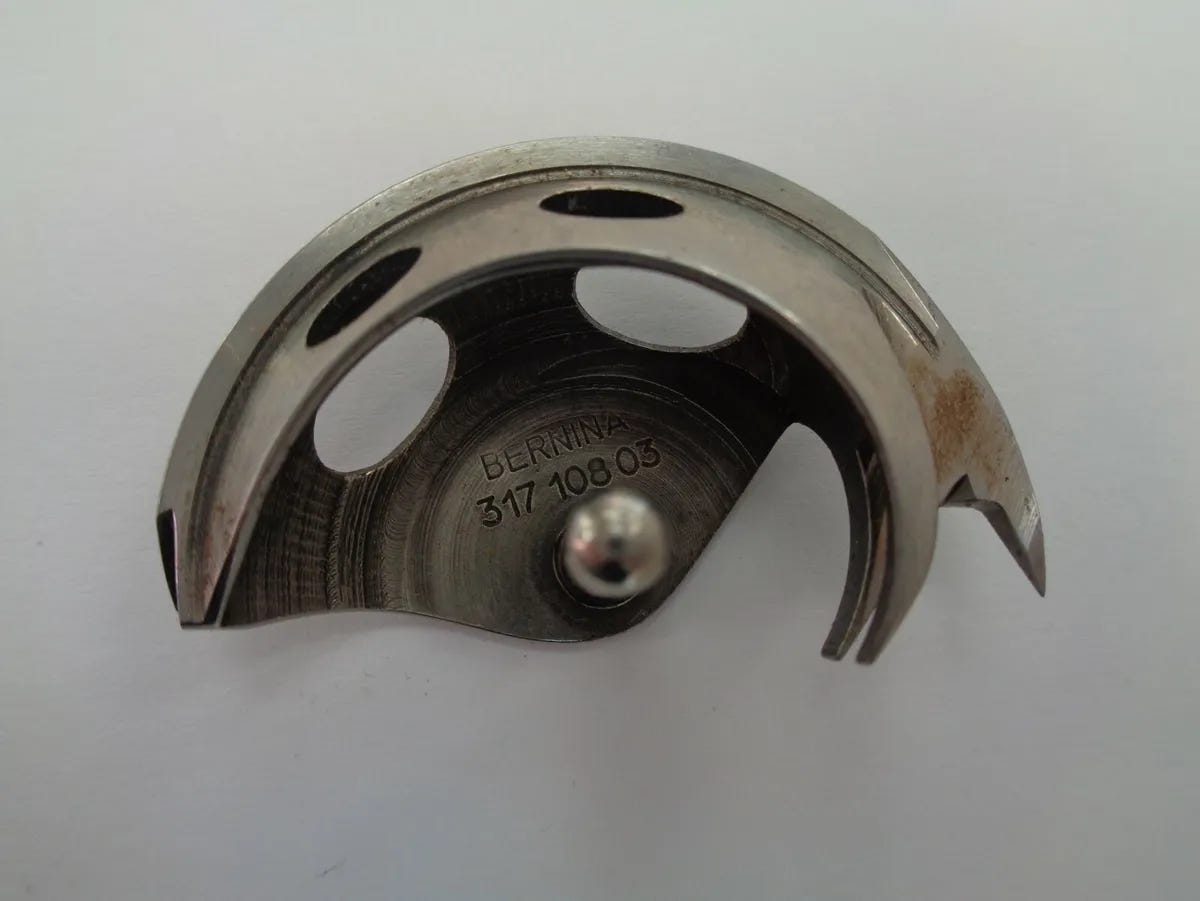
4. Bernina B9 hook
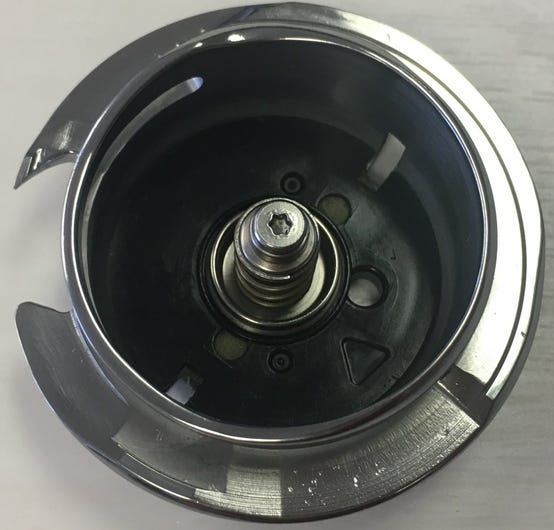
The B9 is the most exotic hook on this list. In essence, it’s a very large vertical rotary hook infused with a handful of creative engineering details. It’s worth including because Bernina machines with the B9 hook are extremely popular, and they consistently produce beautiful stitches.
Why Bernina invented it
In the early 2000s, Bernina had a problem. Sewists loved the heavy feel and stitch quality of its oscillating CB hook machines, but they also wanted modern features from the Japanese machines, like automatic thread trimming and 9 mm stitch width. Those features are impossible on an oscillating hook machine.
Bernina first switched some machines to a rotary hook to get those features, but they didn’t have the same feel or stitch quality, and Bernina loyalists weren’t happy. So Bernina invented the B9: the feel of the oscillating hook, compatible with modern features.
The B9 hook in action.
In review
- The hook catches the needle thread loop and carries it around the bobbin case to form the knot.
- Horizontal rotary = drop-in bobbin, spins a full circle. Most modern Japanese machines.
- Vertical rotary = front- or side-loading bobbin, spins a full circle.
- Oscillating (CB) = front-loading, swings back and forth. Classic Bernina feel.
- B9 = Bernina’s large vertical rotary hook that keeps the CB feel with modern features.
Cleaning around your hookHow to Clean a Sewing Machine
Thank you for reading!
If you found this helpful, share it with your fellow sewists.
— Cale
Keep learning
