Sewing Machine Needles Explained
Sewing Machine Needles Explained
How to Choose the Right Needle
When it comes to sewing, the needle is your most critical tool, yet it’s often overlooked. Understanding sewing machine needles is key to achieving perfect stitches and extending the life of your sewing projects. Whether you’re a beginner or a seasoned sewist, choosing the right needle for your machine and fabric can make all the difference. This comprehensive guide will help you understand the anatomy of a sewing machine needle, how to read a needle package, and the various types of needles available — all to ensure you select the perfect needle for your next project. Plus, we’ll show you where to find high-quality needles that suit your specific sewing needs.
How to Read a Pack of Sewing Machine Needles
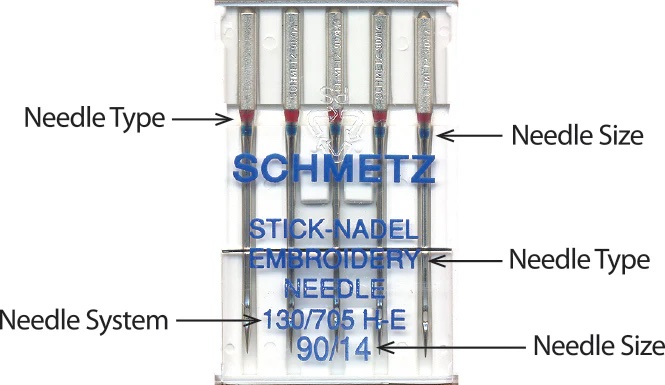
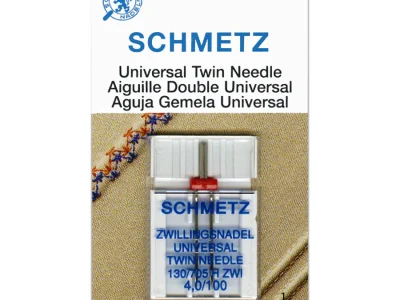
Understanding how to read a pack of sewing machine needles is essential for selecting the right needle for your project. Here’s what you need to know:
System Number
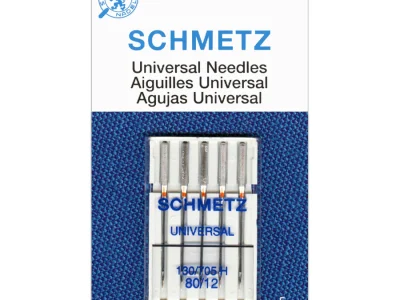
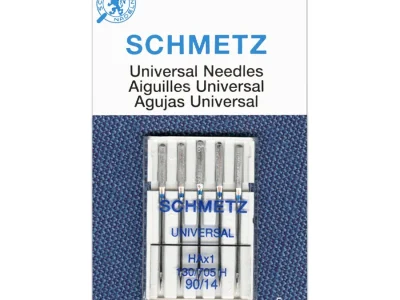
Most home sewing machines use the same needle system, making it simple to find compatible needles. The system number — indicating the needle’s overall dimensions — is always printed on the needle package. Common system numbers for home sewing machines include 130/705 H, HA1, HAx1, and 15×1. These numbers refer to the needle’s length, shank diameter, and the flat shank design that ensures proper positioning in your sewing machine.
Needle Size
Needle sizes are indicated by two numbers, such as 80/12, 90/14, or 100/16. The first number represents the European size (e.g., 80), while the second number is the U.S. size (e.g., 12). A larger number means a thicker needle, better suited for heavier fabrics or thicker threads — as the size increases, so does the needle’s eye, to accommodate thicker thread. A size 110/18 needle is perfect for heavy-duty projects, while a size 75/11 is ideal for lightweight fabrics.
Needle Type
The needle type is determined by its point design and intended fabric or thread use. The most versatile option is the Universal needle, which works well for a wide range of fabrics and is typically the most affordable. If you’re satisfied with your results using a Universal needle, there’s no need to switch.
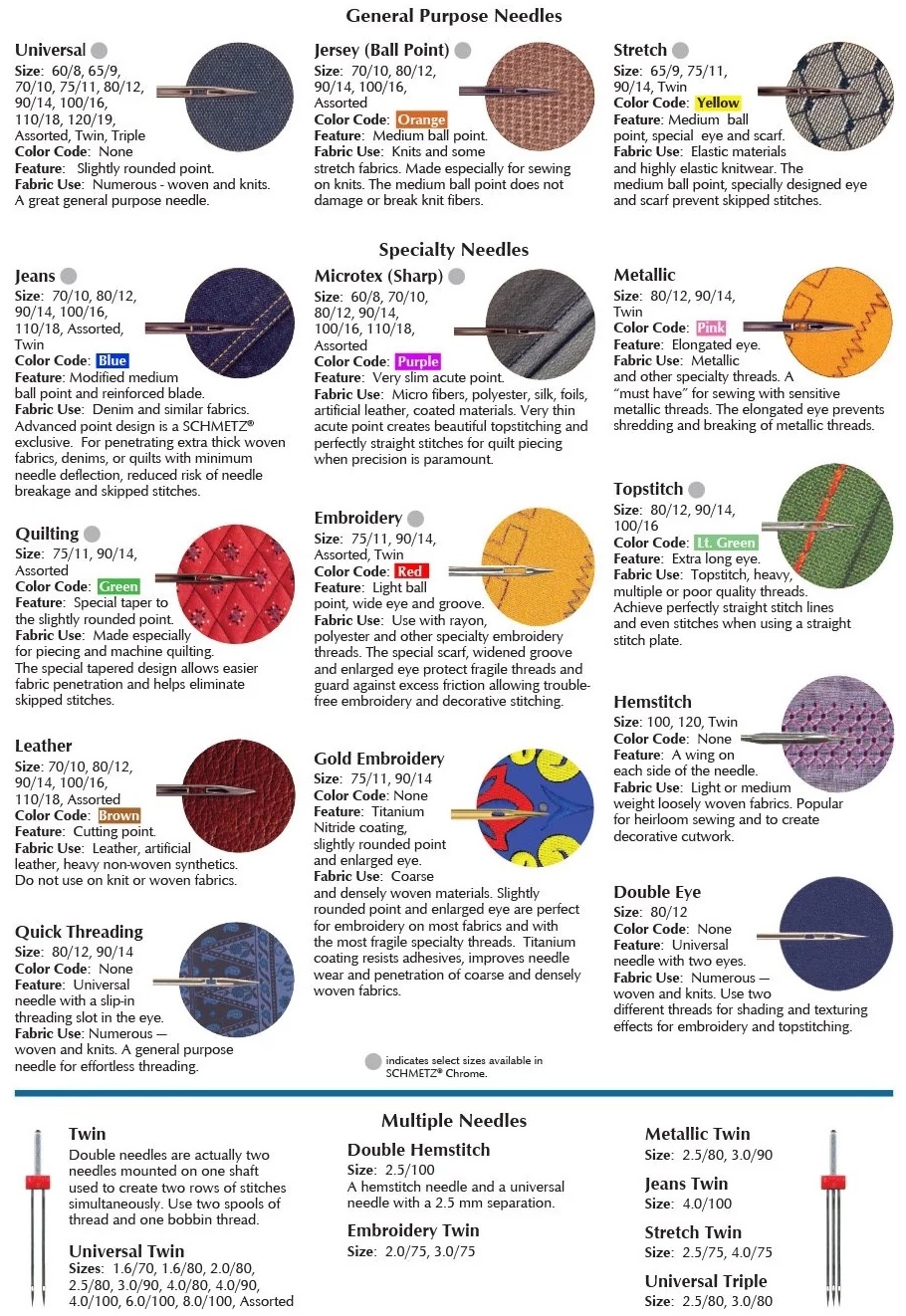
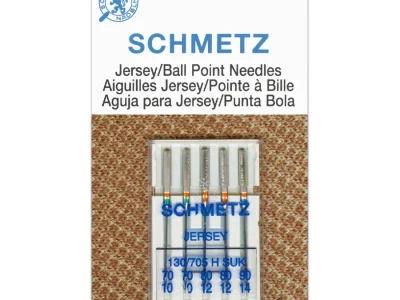
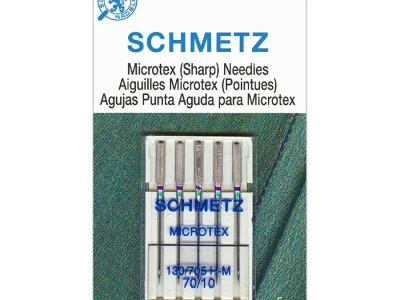
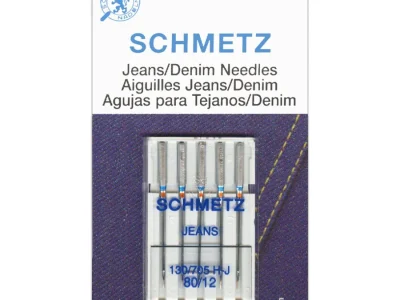
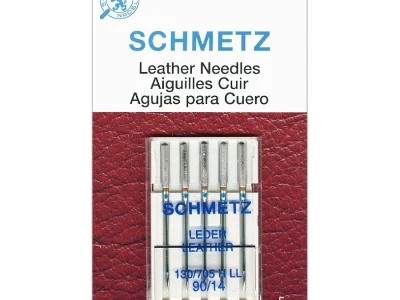
For specialized needs, look for needles labeled with specific fabric types or techniques, such as Quilting, Denim, Embroidery, Leather, Knit, Topstitch, or Microtex. Labels like “Sharp” or “Ball Point” refer to the needle’s point design — sharp-point needles (Quilting, Denim) excel on tightly woven fabrics, while ball-point needles (Knit, Stretch) are ideal for knitted or stretchy materials. A Quilting needle, for example, can also be used on Denim, making it a versatile addition to your toolkit.
By learning how to interpret needle packaging, you’ll always be equipped with the right needle for your project, ensuring professional-looking results every time.
Anatomy of a Sewing Machine Needle

- Butt
- The beveled end allows easy insertion in the needle bar.
- Shank
- Household needles have a flat shank while commercial and industrial needles have round, threaded, notched, or other special shanks. Shanks allow perfect positioning of the needle in the sewing machine.
- Shoulder
- The sloping area transitioning between the shank and blade. SCHMETZ color codes appear on the shoulder.
- Blade
- Needle size is determined by the blade diameter (i.e., size 75 is .75 mm).
- Groove
- The groove cradles and guides thread to the eye. The length and size of the groove vary according to needle type.
- Scarf
- The indentation above the eye that allows the bobbin hook to smoothly grab the thread under the throat plate to create a stitch. The shape and size of the scarf vary according to needle type.
- Eye
- The hole through which thread passes. The shape and size of the eye vary according to needle type.
- Point & Tip
- Length, shape, and size vary according to needle type.
- Needle Type band
- Upper color band indicates needle type (i.e., Stretch).
- Needle Size band
- Lower color band indicates size (i.e., 75/11).
Different Types of Sewing Machine Needles
General Sewing Machine Needle Guidelines
- Use a high-quality brand of needle. We recommend Schmetz needles. Schmetz is a German manufacturer and is considered by most experts to be the best needle available.
- If you are not sure what needle size to use, try an 80/12 Universal. It is a great all-around needle for a variety of fabrics and thicknesses — it’s what we use in our service department.
- Try a standard Universal needle first before moving on to a specialty needle. We generally don’t recommend switching preemptively — though we do now suggest Topstitch needles to anyone who has trouble threading, whether by hand or with a threader. Topstitch needles are sharp-point with a larger eye, which makes threading easier.
- If you’re getting skipped stitches on stretch or knit fabric, use a ballpoint or stretch-designated needle. This reduces “flagging” and aids stitch formation.
- If you’re getting a slightly zig-zaggy straight stitch on wovens, try a Sharp, Denim, Microtex, or Quilt needle. The sharp point breaks the fabric strand during penetration instead of deflecting to one side, for a straighter-looking line.
- If you’re getting shredding or unusually high thread breakage, try a Topstitch or Embroidery needle — they have a larger eye (an 80/12 Topstitch can have the same eye size as a 110/18 Universal), letting thread flow more easily.
Common Misuses We See with Sewing Machine Needles
- Too large a needle size is being used. A needle is not a nail — try a 12 instead of a 16 or 18 on thick fabric. It’s easier for a pin to go through something thick than a nail. Large-diameter needles cause plenty of problems.
- Too small a needle size is being used. Any size under 11 should be used extremely seldom — few threads flow smoothly through the small eyes of a 10 or below, and the hole it creates rarely leaves room for the knot to tuck in. Needle threaders often bend on anything smaller than an 11 or 12.
- Expensive needles are being used when they’re not needed. Why pay more?
- Dull or bent needles in the machine create a popping sound and poor stitch quality.
- The needle isn’t fully inserted, or is inserted backwards, causing skipped stitches and thread breakage. The flat side of the needle should face the back of the machine — “flat to the back” is the rule on the vast majority of home machines.
Shop Sewing Machine Needles
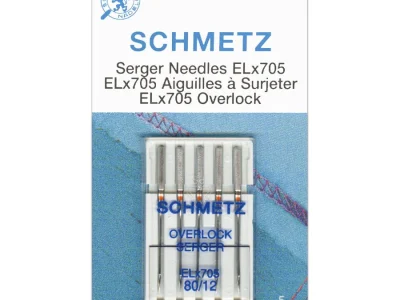
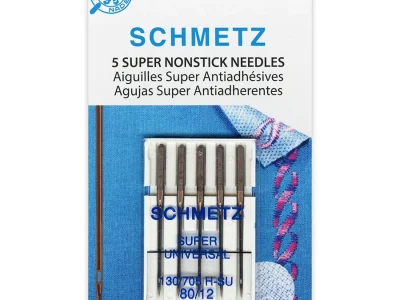
When it comes to sewing machine needles, quality matters — that’s why we exclusively sell needles made by Schmetz, the trusted German needle manufacturer. Renowned for their precision and durability, Schmetz needles are designed to meet the highest standards, ensuring high stitch quality, reduced thread breakage, and a smoother sewing experience. Browse our collection below.
We offer free shipping on any order of $25 or more. Need to stock up? Bundle your needle order with other essentials like sewing machine oil, thread, or bobbins to reach the threshold and save more.

















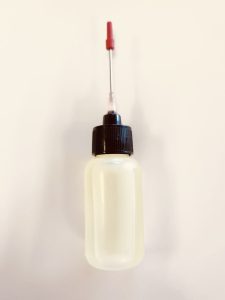
This is the oil to get for nearly every home sewing machine: Janome, Baby Lock, Brother, Singer, Juki, Viking, Pfaff, Elna, some Bernina. Not the right oil for Bernina machines with a B9 hook system (jumbo bobbins) or a CB hook system (oscillating hook). Flexible spout reaches tight spots — includes 4 oz of the same premium oil our technicians use when they service machines. Over 60 million sold.
This is the oil to get for Bernina machines with a B9 hook system (jumbo bobbins; e.g. B480, B570, B770) or a CB hook system (oscillating hook; e.g. 830/930 Record, 1130, 1230, 1260, 1530). Specially designed to minimize friction, enhance performance, and ensure longevity — trusted by technicians and enthusiasts alike.
Thread, Bobbins & Notions
Round out your kit with the thread we stock alongside our needles — a few options are variable products, so “Select Options” opens the product page to pick weight or color.