
Sewing Machine Repair Checklist
From the Repair Bench
This is the checklist my dad, Dan Schoenberg, gave me when I first started servicing machines in high school: everything a trained technician does when they service your machine.
He called it the COA Checklist: Clean, Oil, Adjust. I hope you find it interesting, and that it demystifies what happens when your machine is on our bench.
— Cale
Why People Bring Machines In
The problems that start it
When someone brings their machine to our shop for service, it’s usually because it has started having a particular problem. Common ones include:
- Poor stitch quality
- Skipped stitches
- Unusual sounds (squeaking, growling, etc.)
- Electronic issues (no power, error messages, etc.)
- Fabric feeding poorly
- Needle threader not working
Order matters
The most important thing a technician must remember is to work in a precise sequence, because one adjustment affects another. For example, you must always check and adjust feed timing before hook timing. Changing feed timing always changes hook timing, but changing hook timing doesn’t change feed timing. In fact, most adjustments have a direct effect on every other adjustment.
There are two main categories of adjustments: the feeding system and the stitch-forming system. Then there are minor areas like bobbin winding, the needle threader, and electronic calibrations.
The Checklist
Clean · Oil · Adjust
Teardown, cleaning & lubrication
- Remove all external covers to expose all inner workings.

- Disconnect key electrical connections and remove circuit boards as needed.
- Clean the machine with compressed air and remove all shredded or caught-up thread.

- Inspect for worn or broken parts.
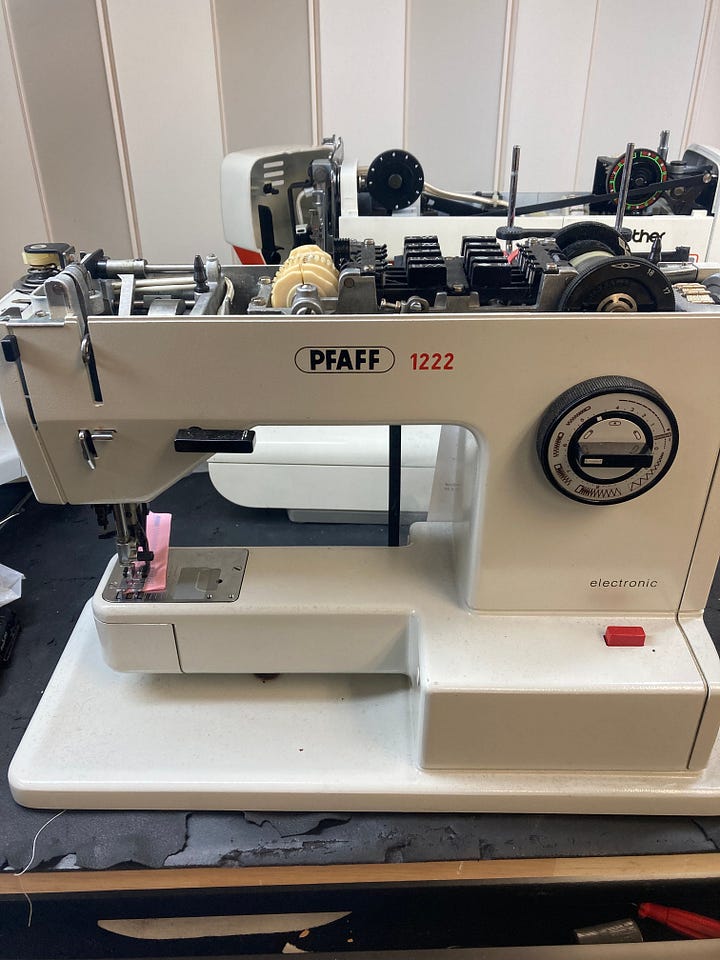
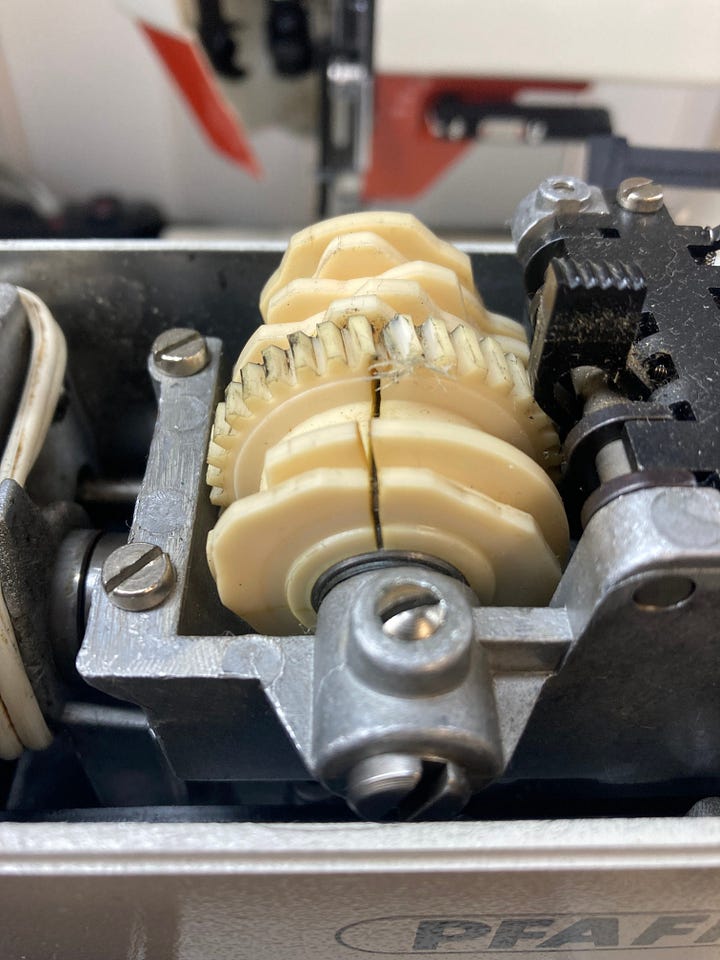
Broken gear on a Pfaff 1222.
- Take up shaft play and gear lash (translation: make loose parts tight again).
- Lubricate the machine. As a general rule, we do not use any grease. More on sewing machine oil.
Feed system adjustments
- Motor belt tension

- Feed dog position in the needle plate
- Timing of feed motion
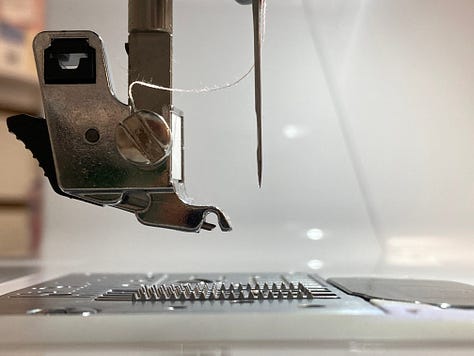
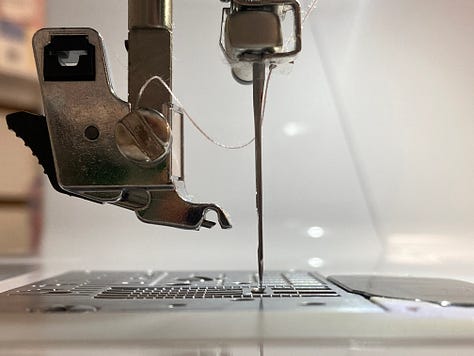
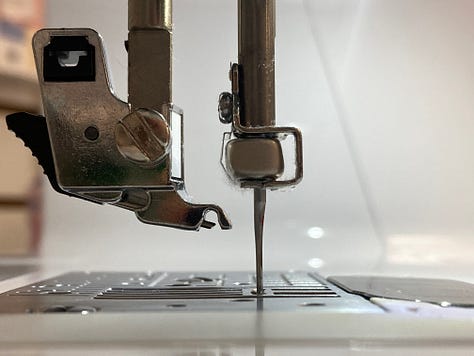
When the needle is up, the feed dogs are above the plate feeding fabric. When the needle goes below the plate, the feed dogs must drop below it too. You never want the machine feeding fabric while the needle is in it. More on timing.
- Feed dog height

- Synchronizer (you wouldn’t want the needle moving right and left while in the fabric)
- Presser foot alignment and height
Stitch-forming parts
- Position of needle in needle plate (left to right and front to back)
- Hook-to-needle clearance (must be close, but not touching)

- Hook timing

- Needle bar height
- Bobbin case positioning finger or bracket

Sew-off adjustments
- Bobbin winder and bobbin winder auto-stop
- Bobbin case thread tension
- Check spring travel

- Top thread tension
- Forward and reverse feeding (the machine should feed forward the same as in reverse)
- Foot control speed calibration
There are probably 20 other secondary adjustments I haven’t listed. On top of the checklist, a technician also addresses the specific issues that brought you to us in the first place.

Due for a service?
Clean, oil & adjust, done right
Every machine on our bench in Walnut Creek gets this full checklist, in this order.
Between services


Thank you for reading
Please share this with anyone you know who might find it interesting or helpful.
— Cale
More troubleshooting
