
Damaged Needle Plate: What Causes Needle Strikes?
Technician Tips
Damaged Needle Plate: What Causes Needle Strikes?
A relatively common issue we see when servicing machines is needle strikes that damage the needle plate hole.
This area of the machine can really get chewed up, which can cause stitch quality issues and thread breakage.

Needle Deflection
Fabric is only fed with the needle out
Needle strikes happen for a handful of reasons, all involving needle deflection. Instead of passing straight down through the needle plate hole as designed, the needle deflects as it pierces the fabric and changes direction, so it makes contact with the needle plate.
Three common causes of needle deflection:
- Sewing over a pin or a zipper. If we hit a pin or zipper, the needle deflects and goes down at an angle instead of straight through the hole, where it can strike the plate and cause damage.
- Pushing thick fabric through. If the machine struggles to feed thick material and we help push it along, we may accidentally push the fabric while the needle is in it. Fabric is only supposed to be fed with the needle out of the fabric, so this creates needle deflection and potential needle strikes.
- Feed timing. If this critical setting is out of whack, the feed dogs feed the fabric while the needle is in it, causing deflection. If your feed timing is off, you’ll need a trained technician to make the adjustment. More on feed timing.
Why Are Needle Strikes a Problem?
The thread has to pass through that hole
Needle strikes on the needle plate hole are a problem because the thread must pass through that hole for the machine to make a successful stitch. Sharp burrs can cause the thread to break.


Even if a burr doesn’t break the thread, it can cause stitch quality issues, as shown above. Small loops on the underside of the fabric are usually caused by a zero-tension condition, which can usually be solved with a troubleshooting exercise called the pull test. But we’ve also found that small loops can be caused by large burrs that jut across the needle plate hole.
Needle deflection can damage more than the needle plate. It can also damage the machine’s hook point and the presser foot. Here’s a gnarly burr on a presser foot:
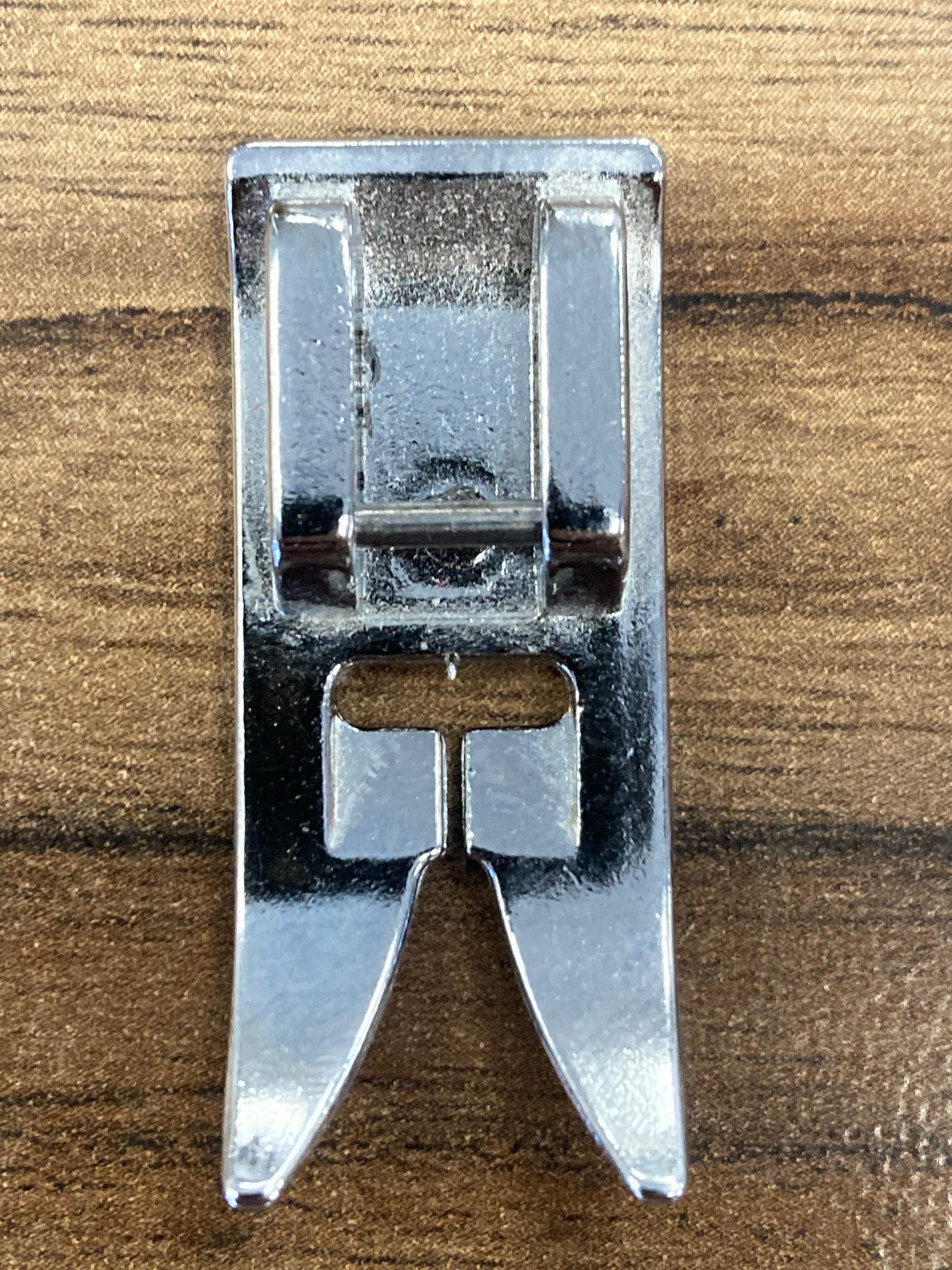

A burr on the presser foot from repeated needle strikes.
Two Quick Notes on Needle Plate Strikes
Sanding burrs · skipping titanium
- Sand off minor burrs with emery cord. If the burrs are really bad, take the machine to a sewing machine technician, who has more tools and experience grinding them away. Sometimes, though, a needle strike leaves burrs so bad that the needle plate must be replaced.
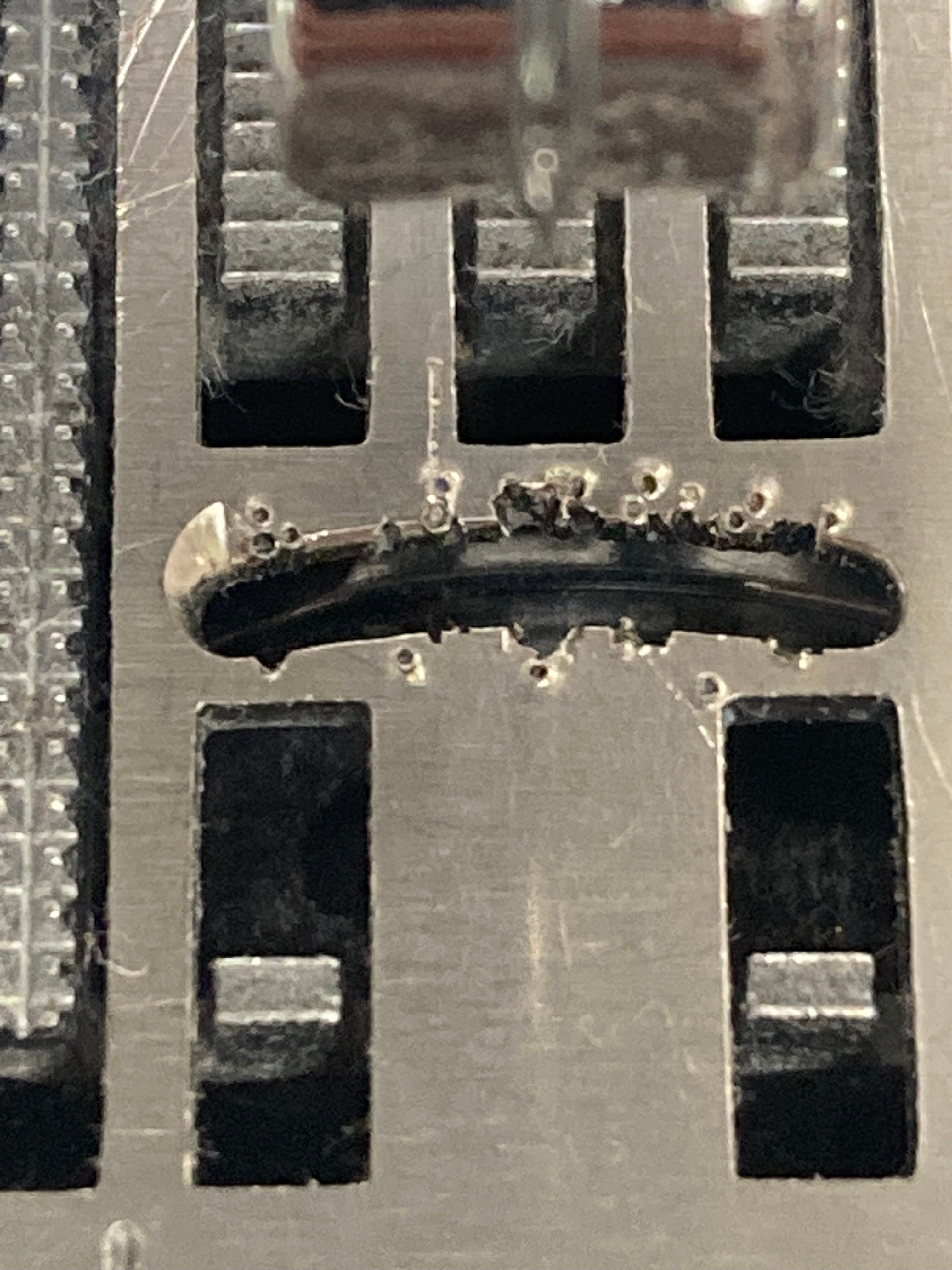
- I recommend you do not use titanium needles. They’re extremely strong and don’t break, which is not a good thing. If your needle hits the needle plate square on, you want the needle to break. Needles are cheap and easy to replace. If the needle doesn’t break, a part of the machine will. The needle plate below was chewed up by a titanium needle that shot through the metal like a bullet. There’s no fixing a plate this bad; it needs replacing.
Summary
- Needle strikes that damage the needle plate hole can cause stitch quality issues and thread breakage.
- The most common causes: sewing over a pin or zipper, or forcing super-thick material your machine has trouble handling.
- Sand minor burrs with emery cord; take bad ones to a technician.
- Avoid titanium needles if you can.
Regular needles break before your machine does

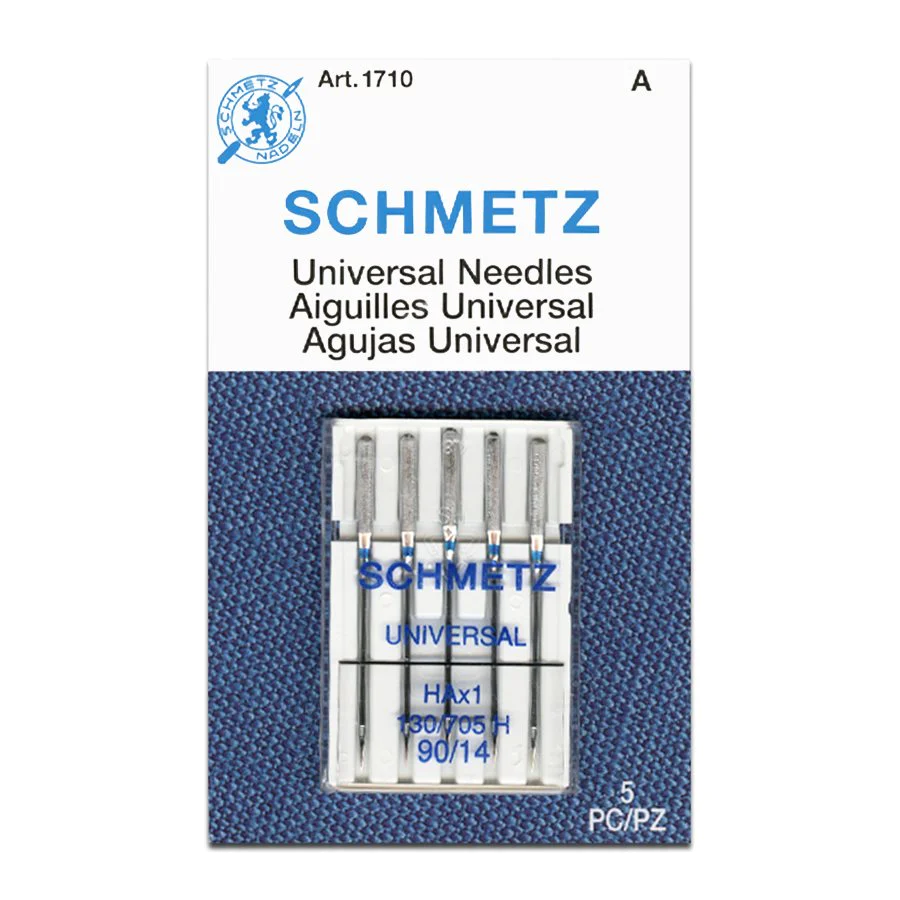
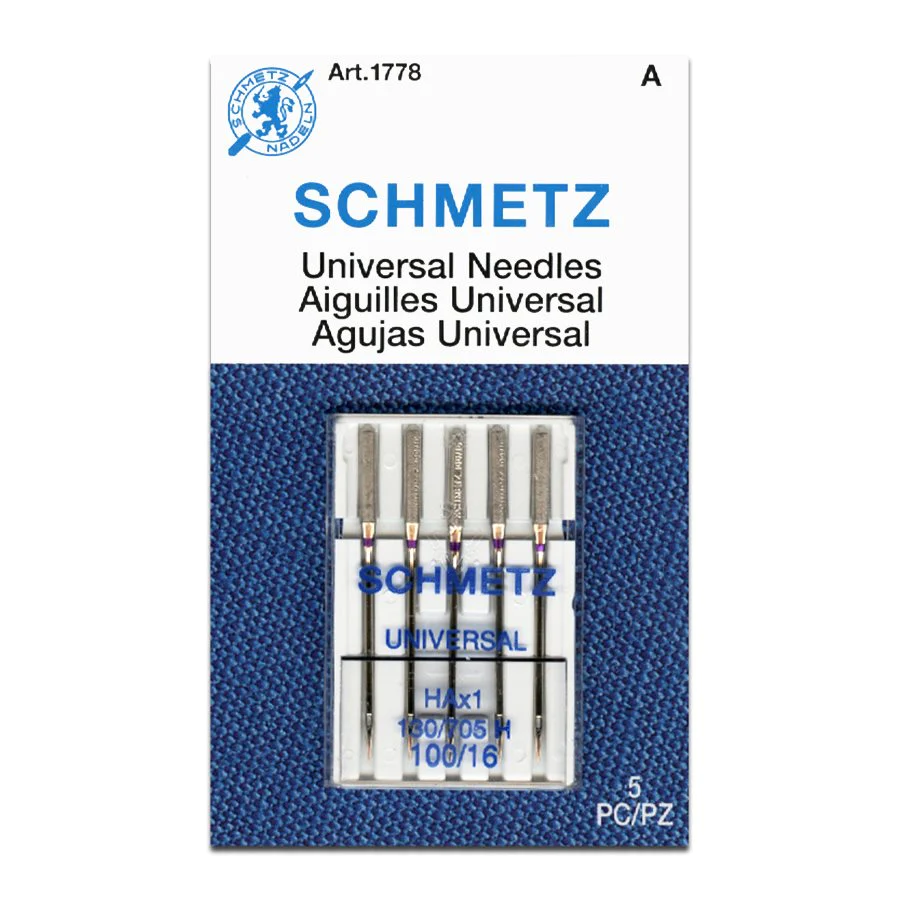
Also part of the skipped stitches flow chartSkipped Stitches Troubleshooting Flow Chart
Burrs too deep to sand?
We can polish or replace it
Our technicians grind out burrs on the needle plate, hook, and presser foot, or replace the part when it’s beyond saving.
More troubleshooting
