
Importance of a Sewing Machine Take Up Lever
Sewing Machine Take Up Lever: the key to troubleshooting large thread loops on the underside of the fabric
If you get large thread loops (akin to a bird nest) on the underside of the fabric, then take a look at you sewing machine take up lever. There's a good chance the thread isn't in the take-up lever eyelet. In that case, you ought to re-thread the machine and visually confirm that the thread slides into the take-up lever eyelet.
Where is the take-up lever?
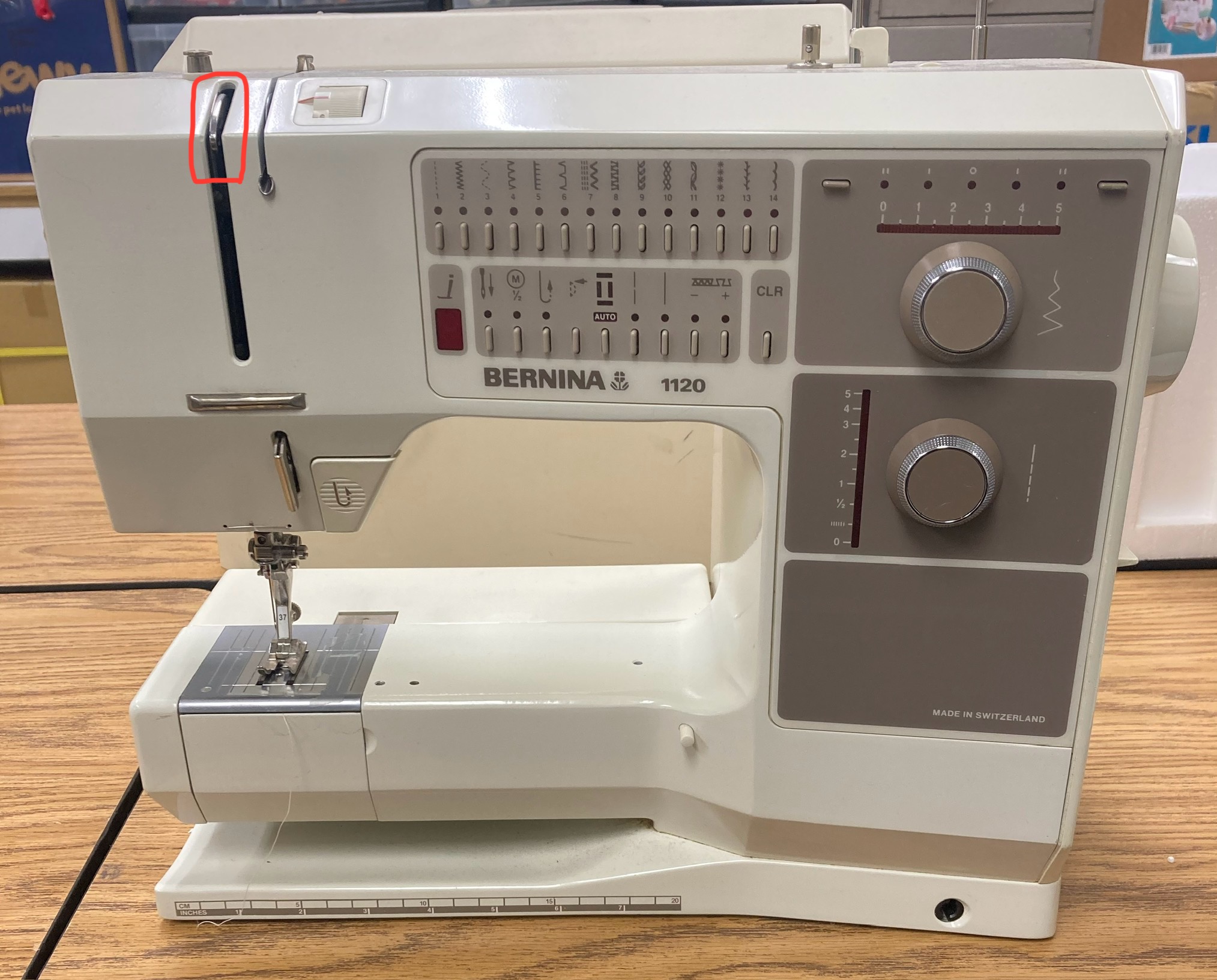

Failure to thread the take-up lever is one of the most common mistakes sewists make when threading their sewing machine. The result is large loops on the underside of the fabric that could be accurately described as a “bird’s nest.” This can lead to additional problems such as a thread jam in the area around the hook and bobbin case, severe needle strikes in unwanted locations, or the machine going out of time.

Steps you can take to ensure the take-up lever gets threaded properly:
(1) Move the Sewing Machine Take Up Lever to the Raised Position
The action of the take-up lever is such that the take-up lever moves up and down as the needle moves up and down. You can observe this on your machine by turning the handwheel towards you and watching the movement of the take-up lever in relationship to the movement of the needle.
Unless it is in its raised position, the take-up lever is more or less hidden within the machine’s cover and not visible to the sewist. If the take-up lever is hidden as we thread the machine, then it is likely that we will not get the thread to properly slide into the takeup lever eyelet.
To combat this problem, it is wise to get in the habit of having the take-up lever in the highest position prior to threading the machine. On electronic machines, you can easily accomplish this position by use of the needle-up/needle-down button, which sends the take-up lever up to the ideal threading position. On mechanical machines, you can get the take-up lever to the highest position by manually turning the handwheel.

NOTE: there are certain machine designs where the takeup lever does not stick out of the machine when the needle is in its highest position. In order to visually confirm that the thread has slid into the takeup lever eyelet, you may need to stand up and obtain a “bird’s eye” vantage. Regardless, the same core principle applies: before you begin to thread the top half of your machine, raise the needle to the highest position so that the takeup lever is in the ideal threading position.
(2) “Floss” the Thread into the Take-up Lever Eyelet
Another reason for misthreading the take-up lever is because the design of the take-up lever is similar to that of a wasp trap– meaning, it is sort of difficult to get the thread into the take-up lever, but once the thread has passed that threshold and slid into the eyelet, it is then impossible to slide out.
Because of this wasp-trap design, you may feel some resistance on the thread as you slide the thread from right to left around the takeup lever (as most machines will instruct). If you feel this resistance as you thread the take-up lever, or you are following instructions properly and the thread still isn’t sliding into the eyelet, I recommend a technique I call “flossing.”
With your right hand, firmly pinch the thread coming off the thread spool between your thumb and index finger; meanwhile, simultaneously attempt to thread the takeup lever as previously instructed. With the tension created by pinching the thread coming off the thread spool, it should now be easier for the thread to slide into the takeup lever eyelet.
The Role of the Take-up Lever
Failure to thread the take-up lever will result in large loops on the underside of the fabric (also known as “bird nesting”). Why is this the case?
The stitch made by a sewing machine is essentially a knot that is formed between the upper thread spool and the bobbin thread. The knot is formed in the bobbin case area beneath the needle plate, after the needle pierces the fabric and reaches its bottommost position and begins its trajectory upward.
But if the thread knot is formed beneath the needle plate, how does it end up in the fabric?
That is the role of the take-up lever. The take-up lever swings up and down vertically, more or less in tune with the motion of the needle. The action of the take-up lever moving upward cinches the knot from down below the needle plate up into the fabric. Therefore, it logically follows that if we fail to thread the take-up lever, then the knot never gets cinched up into the fabric. The result is large loops on the underside of the fabric.
Summary
- Visually confirm the thread has slid into the take-up lever eyelet.
- Failure to thread the take-up lever causes large thread loops on the underside of the fabric.
- It is easiest to thread the take-up lever when the take-up lever is in its raised position.
- On electronic machines you can accomplish this by using the machine’s needle up/down button.
- On mechanic machines you can accomplish this by turning the handwheel. - The “flossing” technique is useful for ensuring the thread slides into the take-up lever eyelet.