
Puckered Fabric: Technician Tips
Puckered Fabric: Why It Happens & How to Avoid It
Puckered Fabric is a distortion where the fabric appears indented– or, puckered– in a manner where it cannot be smoothed out.
You can see examples of puckered fabric in the photos below:


What causes puckered fabric?
Fabric puckering occurs at the point in the stitch-making process when the needle pierces the fabric and travels downward through the needle plate hole. If the needle fails to pierce through the fabric cleanly, and instead pushes the fabric down into the needle plate hole before poking through, then the stitch will get made with the fabric pushed down into the hole and the fabric will maintain that pushed-down– puckered– shape.
To prevent puckering, we must avoid the scenario where the fabric gets pushed down into the needle plate hole as the stitch is being made. There are 3 main techniques we can employ to avoid such a scenario.
(1) Straight-Stitch Needle Plate
Most modern sewing machines are designed with a maximum stitch width of either 5.5mm, 7mm, or 9mm– meaning the needle plate hole has a corresponding width of either 5.5mm, 7mm, or 9mm. Any way you cut it, that’s a fairly large hole for the fabric to get sucked down into.
In theory, the wider the needle plate hole, the more susceptible the machine is to fabric puckering. Thankfully, sewing machine manufacturers are aware of this, so they make straight-stitch needle plates for nearly every machine.
Straight stitch needle plates support the fabric better than their 7mm/9mm counterparts. The needle plate hole is smaller and consists of less empty space for the fabric to get pushed down into; therefore, fabric puckering is less likely to happen.


(2) Stabilizer
Imagine we are experiencing fabric puckering while sewing a buttonhole or a decorative zig-zag stitch. In this case we cannot use a straight-stitch needle plate to solve our puckering problem.
What do we do? The answer is stabilizer.

Fabric puckers when it gets pushed into the needle plate hole. It gets pushed into the needle plate hole because it is not sufficiently supported. Stabilizer is essentially fabric support.
A regular straight stitch makes a stitch about every 2-3 millimeters of fabric. That is one hole being poked through the fabric every 2-3 millimeters. But now imagine we are sewing a dense decorative stitch where the number stitch sewn per centimeter of fabric is much higher than the stitches sewn on a regular straight stitch. With some decorative stitch patterns, the needle might pierce the fabric 5-10 times every 2-3 millimeters. That is a lot of holes being poked into a small area of fabric.
That many holes can weaken the fabric’s stiffness, stiffness being natural support for the fabric. Decreased stiffness makes it much more likely that the fabric will get pushed down into the needle plate hole and pucker. So, if you are sewing fabric that is puckering during a zig-zag or decorative stitch, add a piece of stabilizer to the fabric for support.

(3) Match the Needle Type to the Fabric
Depending on the fabric one is sewing, the wrong needle can cause puckering if it’s not piercing the fabric as easily as it ought to.
Remember, the key to avoid a scenario where the fabric gets pushed down into the needle plate hole as the stitch is being made. If we are using a ballpoint needle [with a rounded needlepoint] to sew on tightly woven cotton, it may not pierce the fabric crisply. Instead of piercing crisply, the needle may push the fabric down into the needle plate hole before poking through the fabric, and this can cause puckering.
This is why needle companies make different needle types. If you are getting puckering, match the needle type to your fabric. Use a ballpoint needle for knits. Use a stretch needle for stretchy material. Use a universal or sharp needle for cotton.
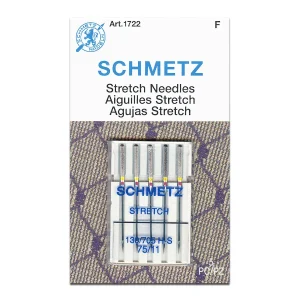
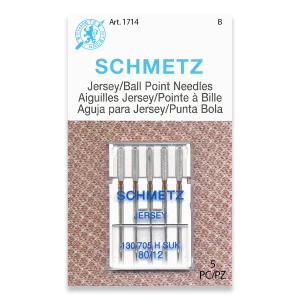

Another important point to remember is that a dull needle can cause puckering because it won’t pierce the fabric crisply. Instead, it will push the fabric down into the needle plate hole before piercing through, which can cause puckering. That’s all to say, change your needle relatively often. 4-8 hours of real sewing time is a general ballpark figure.

Summary on Puckered Fabric
- Fabric puckering occurs if the needle fails to penetrate the fabric cleanly, and instead pushes the fabric down into the needle plate hole before poking through.
- Straight stitch needle plates help reduce puckering because they support the fabric better than their 7mm/9mm counterparts.
- Stabilizer serves as additional fabric support and helps reduce puckering.
- A dull needle or the wrong needle type can cause puckering if it’s not piercing the fabric as easily as it ought to.