
How to Wind a Bobbin
How to Wind a Bobbin: Tips from a Trained Technician
If you're looking to learn how to wind a bobbin on your sewing machine, there is one key rule to remember: the thread being wound onto the bobbin must be under adequate tension.
How do we achieve adequate tension? We make sure that the thread is sandwiched firmly between the bobbin winder tensioner discs.
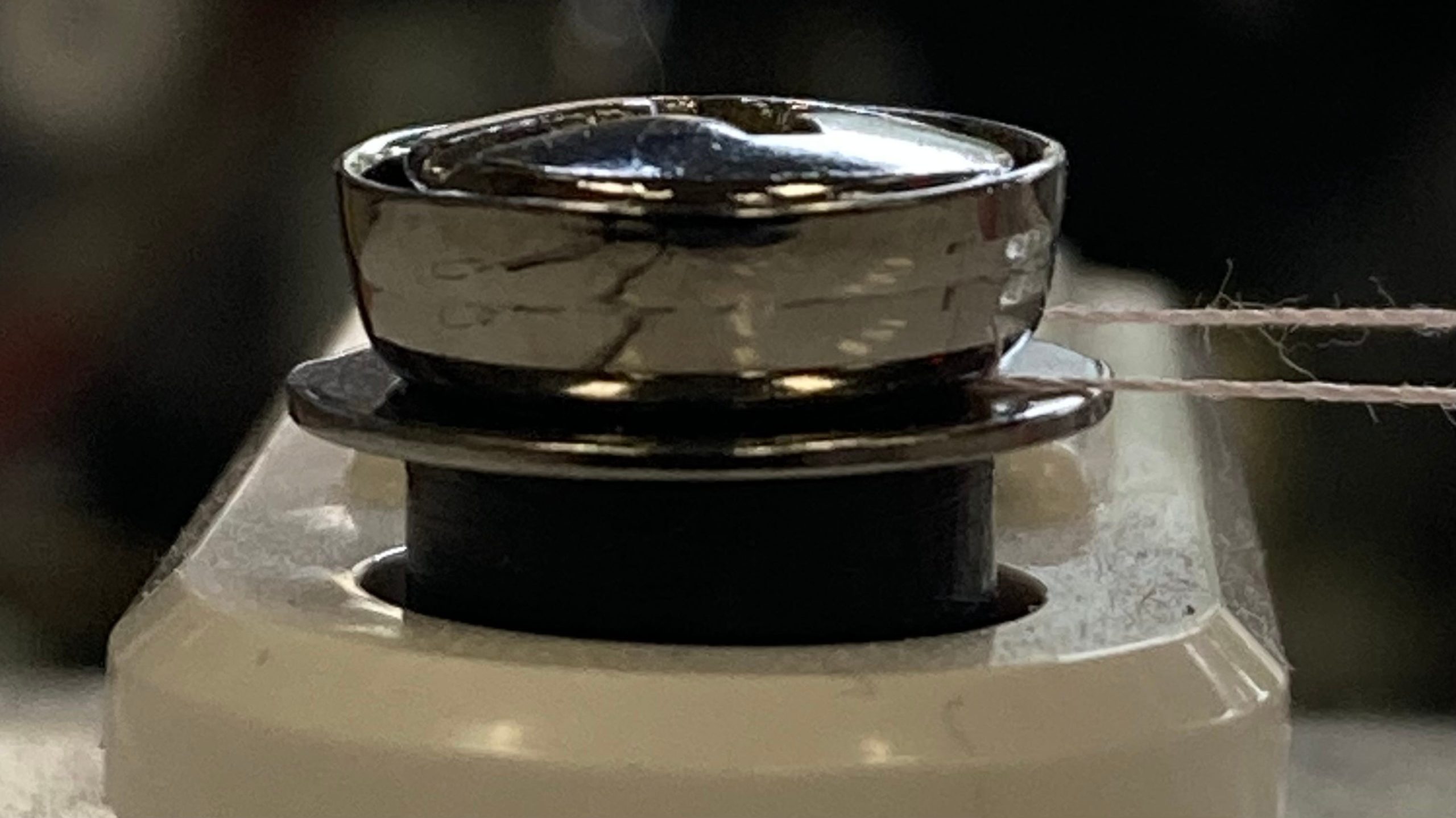
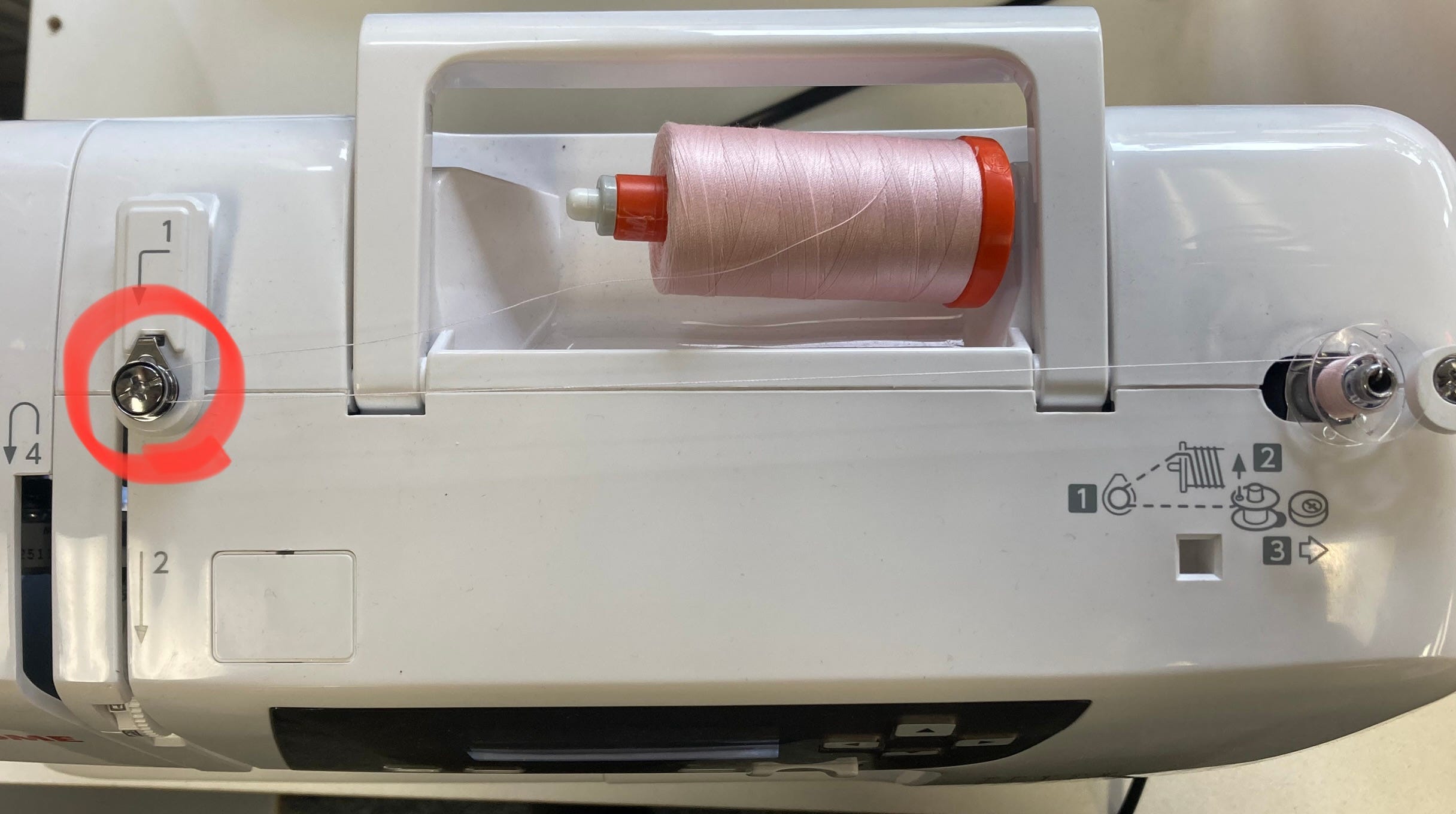
This is where the battle is won or lost. If we get the thread firmly between these tensioner discs, there is a great chance we will wind a tight, even bobbin. However, if we fail to get tension on the thread, the bobbin is guaranteed to wind loose and uneven, which is no good.

How do I ensure that my bobbin thread is under adequate?
After you wrap the thread through the bobbin winder tensioner discs, lightly pull on the thread before you bring it to the bobbin itself. Do you feel a little bit of tension when you pull? If the answer is yes, then you are ready to go on with the bobbin winding process. If the answer is no, then I recommend the trying the following two techniques:
(1) Floss the Thread
Wrap the thread around the tensioner as you were doing before. After the thread is around the tensioner, continue to hold thread in one hand; meanwhile, firmly pinch the thread coming off the thread spool between your thumb and index finger. Now floss the thread back and forth into the tensioner discs, just as one would floss their teeth. This action should situate the thread firmly between the tensioner discs.
(2) 360 Degrees
In your machine’s instruction manual (and perhaps printed onto the machine itself) there is a diagram of how the thread should go around the bobbin winder tensioner discs. Typically, the diagram shows the thread wrapping around the discs 180 degrees or 270 degrees. Most of the time, following the diagram’s recommendation should achieve adequate tension if you floss the thread between the tensioner discs. However, if you follow the diagram and floss the thread and still aren’t getting any tension on your thread, then I recommend wrapping the thread around the bobbin winder tensioner discs a second time– a full 360 degrees. This should give you sufficient tension to complete the bobbin-winding process
Why is it bad to wind a loose, sloppy bobbin?
There is a portion of bobbin thread that is “up next” in the sense that it is the next portion of bobbin thread that will be used to make a stitch. If you wind a tight and even bobbin, the thread that is “up next” will flow freely from the bobbin as it partakes in the stitch-making process. However, if you wind a sloppy bobbin, then the thread that is “up next” may be buried underneath other loose threads due to the bobbin thread being wound loose and uneven. In this case, the thread that is “up next” has to pass through the thread it is buried under, which acts as an obstruction and can lead to stitch quality problems and/or thread jams.
You want the thread to flow freely from the bobbin without obstruction. A loose and sloppily wound bobbin essentially serves as an obstruction, so it’s important to remember the key to winding a good bobbin: the thread being wound onto the bobbin must be under adequate tension from the bobbin winder tensioner discs.
Note: I do not recommend you wind multiple threads onto a single bobbin; this can cause the same problems as a loose and sloppy bobbin.
Summary: How to Wind a Bobbin
- If you want to know how to wind a bobbin properly, the thread being wound onto the bobbin must be under adequate tension.
- Adequate tension is achieved when the thread is firmly sandwiched between the bobbin winding tensioner discs.
- If the thread is not under tension between the bobbin winding tensioner discs, then the bobbin will be wound loose and sloppy.

Other Helpful Troubleshooting Articles
The Pull Test: the cure to thread loops on the underside of fabric
Puckered Fabric: why it happens and how to solve it