
How to Choose the Right Spool Cap
Spool Cap Tips from a Technician
There are two main purposes to the spool cap on your sewing machine.
The first is fairly straightforward: a spool cap holds the thread spool onto the spindle and prevents the thread spool from rattling around and/or falling off.
The second purpose is less obvious, but just as important: spool caps are designed to help the thread flow from the spool as smoothly as possible.
If you examine your spool cap, you will notice that it is made of an extremely soft and smooth plastic. We want the thread to slide across that ultra-smooth plastic opposed to the relatively rough (and potentially jagged) plastic that the spool itself is made of. If the thread is passing over the rough plastic, the thread is susceptible to snagging and/or breaking. If the thread passes over the smooth plastic of the spool cap, we avoid that potential problem.
Whether or not the thread slides off of the smooth plastic or jagged plastic all depends on one thing: using the right size spool cap.
How to pick the right spool cap
You may have noticed that your machine came with multiple spool caps in various sizes.

This begs the question: which size spool cap should you use?
As it pertains to spool caps, the general rule is this: the spool cap ought to be slightly larger than the plastic end of the spool itself. (When I talk about the plastic end of the spool, I am talking about the left end of the thread spool, closest to the needle.)
For example, a thread spool whose plastic end is larger requires a large spool cap. Meanwhile, a thread spool whose plastic end is smaller requires a smaller spool cap.


What we don’t want is a spool cap that is smaller than the plastic end of the spool itself, where the thread passes over the rough plastic spool instead of the smooth plastic spool cap. This is no good.

While we want the spool cap to be larger than the end of the thread spool, we also want the path of least resistance for the thread. We do not want the thread passing over an unnecessarily large spool cap, which can potentially serve as an obstruction that causes thread snagging. In other words, don’t make the thread pass over a mountain if it doesn’t have to. Using a spool cap that is too large for the thread can cause similar problems to using a spool cap that is too small for the thread.
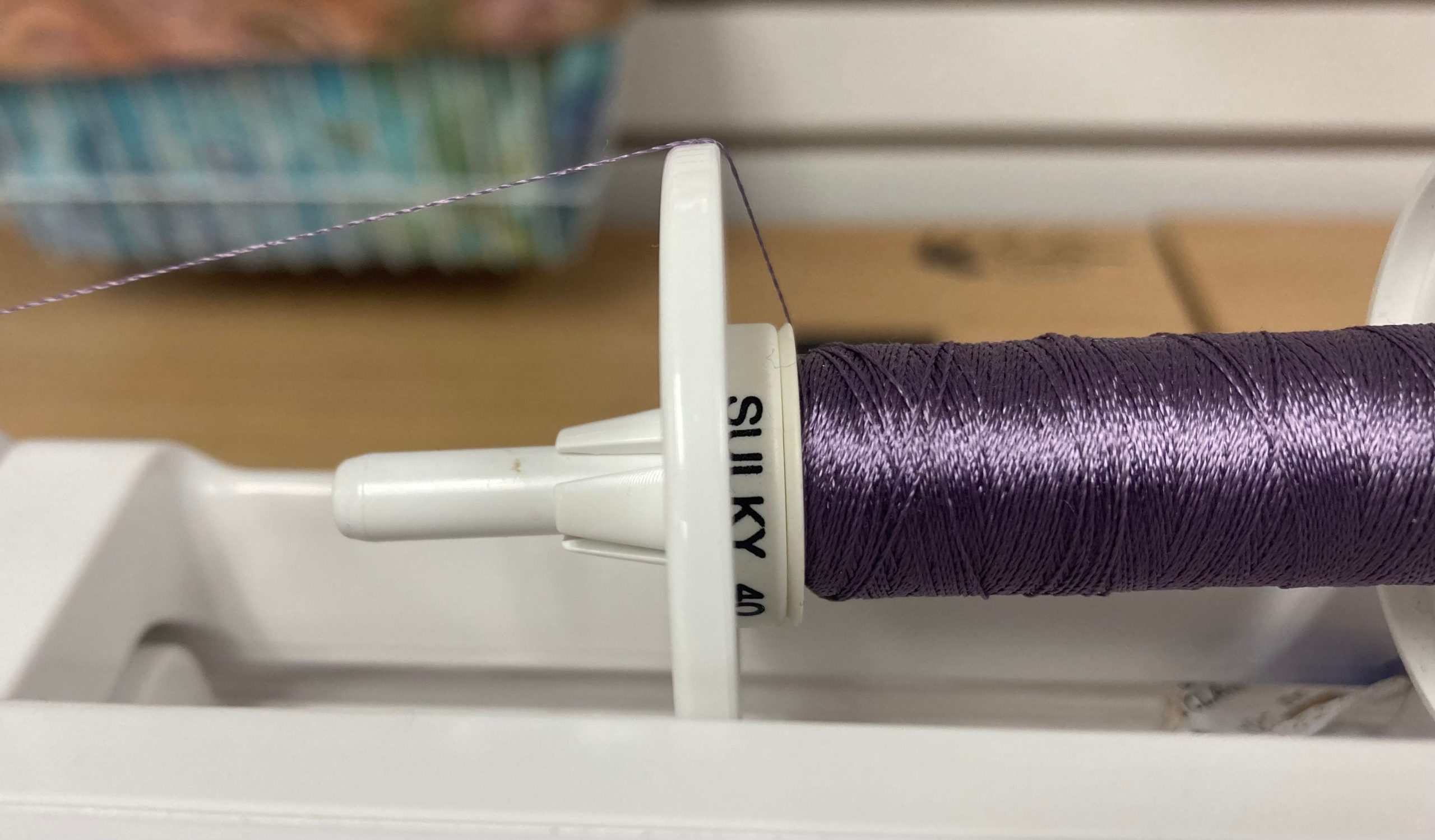
An incorrectly sized spool cap has the potential to cause a number of different problems. From my experience, I have seen it be the culprit of intermittent thread loops on the top side of the fabric (due to intermittent snagging at the site of the thread spool). However, the more common thing I see is when the needle becomes un-threaded after using the machine’s automatic thread trimmer. If the trimmer cuts the thread while the thread is snagged on an obstruction such as the jagged edge of the thread spool, this will cause the thread to recoil and slingshot out of the eye of the needle. The most common culprit for this issue is thread getting snagged on the spool’s rough plastic due to incorrect spool cap size, but I also seen sharp nicks in the machine’s plastic cover (or sharp nicks in the spool cap itself) cause the snag that un-threads the needle.
This brings me to a larger point--
Widening our scope beyond spool caps, the deeper principle to understand here is the importance of an unobstructed thread path, whether it be the upper thread spool that goes through the needle or the bobbin thread inside the bobbin case. This will be a recurring theme throughout this guidebook and useful concept to be aware of whenever troubleshooting your sewing machine.
Summary
- Spool caps are designed to help the thread flow from the spool as smoothly as possible.
- The spool cap ought to be slightly larger than the plastic end of the spool itself.
- We don’t want a spool cap that is smaller than the plastic end of the spool itself.
- We do not want the thread passing over an unnecessarily large spool cap.
- The general principle is that we want the thread path to be unobstructed, and spool caps help us achieve this principle.